
Neurological Rehabilitation In Nagpur | Personalized Recovery And Functional Care With Dr.Ritesh Nawkhare
A neurological condition can change the way a person moves, communicates, remembers things, or manages everyday tasks. Simple activities such as getting out of bed, walking, using the hands, eating, dressing, or speaking may become difficult after a stroke, brain injury, spinal problem, surgery, or other neurological condition. For some people, these changes improve with time. Others may need continued support to regain lost abilities or adjust to new challenges. Recovery is different for everyone. Some patients may need help rebuilding strength and movement, while others may need support with balance, coordination, speech, hand function, or daily activities. The right rehabilitation approach depends on what has changed and how the condition affects the person’s everyday life. At Neurosys Multispeciality Centre in Nagpur, Dr. Ritesh Nawkhare first looks at the patient’s overall neurological condition and the difficulties they are experiencing. The assessment considers the patient’s symptoms, medical history, current abilities, previous treatment, and recovery goals. This helps provide a clearer direction for rehabilitation rather than following the same plan for every patient.
When Neurological Rehabilitation May Be Needed ?
Rehabilitation may become an important part of care when a neurological condition affects a person’s ability to move, communicate, think, or perform everyday activities.
It may be considered after:
▪ Stroke or cerebrovascular conditions
▪ Brain or spinal cord injuries
▪ Neurosurgical procedures
▪ Spinal disorders affecting movement or strength
▪ Nerve and neuromuscular conditions
▪ Movement disorders
▪ Prolonged weakness or loss of mobility
▪ Balance and coordination problems
▪ Conditions affecting speech or swallowing
▪ Other neurological conditions that reduce functional independence
Dr. Ritesh Nawkhare assesses the underlying neurological problem and the functional difficulties it has created. This helps determine what type of rehabilitation support may be appropriate.
Recovery Is More Than Treating The Condition
Managing a neurological disorder is only one part of recovery. Patients may also need support to regain practical abilities that have been affected by the condition. A person may be medically stable but still struggle with walking, climbing stairs, using their hands, speaking clearly, maintaining balance, or completing routine tasks. Rehabilitation addresses these functional challenges and works toward improving independence. At Neurosys Multispeciality Centre, Dr. Ritesh Nawkhare considers both the neurological condition and its impact on everyday life. The aim is to help patients work toward realistic functional goals while adapting care according to their progress.
Common Changes That Rehabilitation Can Address
Neurological conditions can affect different functions depending on which part of the nervous system is involved.
Patients may experience:
▪ Muscle weakness or reduced strength
▪ Difficulty walking or standing
▪ Poor balance or frequent falls
▪ Reduced coordination
▪ Muscle stiffness or abnormal movements
▪ Changes in hand function
▪ Difficulty with speech or communication
▪ Problems with swallowing
▪ Reduced ability to perform daily activities
▪ Changes in confidence and independence
The rehabilitation plan depends on which abilities have been affected and how much support the patient currently needs.
A Rehabilitation Plan Built Around The Patient
There is no single rehabilitation programme that works for every neurological condition. The patient’s age, diagnosis, physical abilities, symptoms, medical history, and recovery goals all influence the approach. At Neurosys Multispeciality Centre in Nagpur, Dr. Ritesh Nawkhare reviews the patient’s neurological condition before guiding the next stage of care.
The rehabilitation plan may focus on:
▪ Improving strength and movement
▪ Supporting walking and mobility
▪ Developing better balance and coordination
▪ Improving hand and limb function
▪ Supporting speech and communication
▪ Helping patients perform daily activities more independently
▪ Preventing complications related to reduced mobility
▪ Maintaining functional abilities over time
Goals can be adjusted as the patient’s condition changes.
The Role Of Physiotherapy In Neurological Recovery
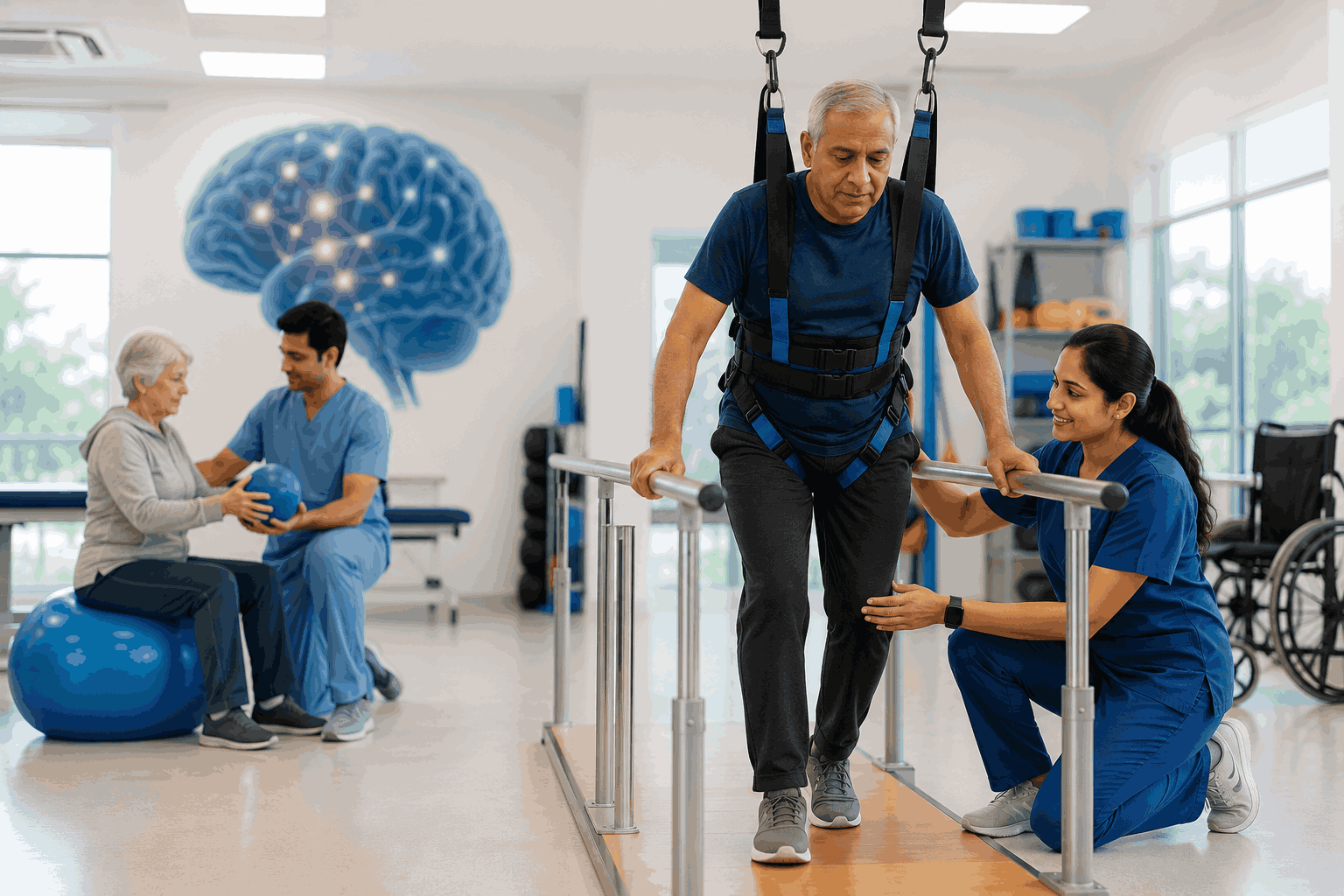
Physiotherapy can play an important role when neurological conditions affect movement, strength, balance, or mobility. Exercises may be used to improve muscle function, joint movement, coordination, and physical endurance. Depending on the patient’s condition, rehabilitation may include walking practice, balance activities, strengthening exercises, movement training, posture work, and functional exercises. The purpose is not simply to perform exercises. The programme should help the patient use their improved abilities in everyday situations. Dr. Ritesh Nawkhare considers the underlying neurological condition while guiding patients toward appropriate rehabilitation support.
Supporting Daily Activities And Independence
Neurological problems can affect much more than movement. They may make everyday activities such as dressing, bathing, eating, writing, using a phone, preparing meals, moving around the home, or returning to work more difficult. Even when a patient has recovered medically, weakness, poor coordination, stiffness, reduced hand control, balance problems, or changes in concentration may continue to affect daily life. Occupational rehabilitation can help patients work on these practical challenges. The focus is on improving the skills needed for everyday activities while helping the patient use their current abilities more effectively. Depending on the individual’s needs, rehabilitation may address hand function, coordination, fine motor skills, posture, task performance, and safe movement. For patients recovering from stroke, brain injury, spinal conditions, or other neurological disorders, daily routines may need to be adjusted during different stages of recovery. Simple changes in the way a task is performed can make activities safer and more manageable.
Benefits Of Neurological Rehabilitation
▪ Supports improvement in strength, mobility, balance, and coordination
▪ Helps patients regain practical skills for everyday activities
▪ Encourages greater independence and confidence
▪ Supports recovery after stroke, brain injury, spinal conditions, or neurological surgery
▪ Helps manage stiffness, weakness, and movement difficulties
▪ Supports communication, hand function, and other affected abilities
▪ Helps patients adapt to lasting neurological changes
▪ Provides structured goals and progress monitoring
▪ Supports patients and families throughout the recovery process.
Recovery And Ongoing Care
Recovery from a neurological condition can take time and may progress differently for each patient. Some people regain abilities gradually, while others may need long-term rehabilitation to maintain function and independence. At Neurosys Multispeciality Centre in Nagpur, Dr. Ritesh Nawkhare considers the patient’s neurological condition, functional abilities, and progress when guiding ongoing care.
▪ Recovery goals can be adjusted as abilities improve
▪ Rehabilitation may focus on movement, balance, strength, and daily activities
▪ Regular follow-up helps monitor functional changes
▪ Therapy may support mobility, communication, and coordination
▪ Long-term care can help maintain independence and prevent avoidable complications
▪ Family guidance can support safe and consistent care at home
The overall goal is to help each patient achieve the best possible level of function and participate more comfortably in everyday life.
Building Back Everyday Confidence
Neurological rehabilitation can help patients regain confidence after a condition has changed the way they move, communicate, or manage routine activities. Recovery is not only about physical improvement. It is also about helping patients feel more capable of handling everyday situations.
▪ Practising useful movements in a controlled manner
▪ Building confidence during routine activities
▪ Encouraging safe participation at home and outside
▪ Supporting gradual return to meaningful activities
▪ Helping patients adapt to abilities that may have changed
Neurological Rehabilitation At Neurosys Multispeciality Centre
Neurological rehabilitation at Neurosys Multispeciality Centre in Nagpur focuses on helping patients regain functional abilities and manage the changes caused by neurological conditions. Recovery needs can vary widely depending on the diagnosis, severity of symptoms, and areas of the nervous system affected.
Under the guidance of Dr. Ritesh Nawkhare, rehabilitation needs are considered alongside the patient’s overall neurological condition. The approach may focus on improving mobility, strength, balance, coordination, hand function, communication, and independence in everyday activities.
▪ Individual assessment of neurological and functional difficulties
▪ Guidance for recovery after stroke, brain injury, spinal conditions, or neurological surgery
▪ Support for weakness, balance problems, stiffness, and coordination difficulties
▪ Rehabilitation guidance for daily activities and mobility
▪ Physiotherapy and other therapy support when appropriate
▪ Regular monitoring of functional progress
▪ Care plans adjusted according to recovery and changing needs
The aim is to help patients make practical improvements, maintain their abilities, and participate more confidently in daily life.
Why Choose Dr. Ritesh Nawkhare For Neurological Rehabilitation?
▪ Specialist neurological assessment by Dr. Ritesh Nawkhare
▪ Individual evaluation based on the patient’s neurological condition
▪ Focus on mobility, function, independence, and quality of life
▪ Rehabilitation guidance based on specific functional limitations
▪ Attention to recovery after stroke, injury, surgery, and neurological disorders
▪ Support for long-term neurological conditions
▪ Coordination with rehabilitation and therapy services when required
▪ Ongoing monitoring as the patient’s needs change
▪ Patient and family-focused guidance throughout the recovery process
Preparing For Life Beyond Rehabilitation
The ultimate purpose of rehabilitation is to help patients use their abilities outside the clinical setting. As recovery progresses, patients may gradually take greater responsibility for personal care, movement, communication, and other everyday activities.
At Neurosys Multispeciality Centre, rehabilitation guidance focuses on helping patients make practical use of their progress and develop greater independence. Family members can also learn how to provide appropriate support while allowing the patient to remain as active and independent as possible.
The goal is meaningful recovery that fits into the patient’s real life, not simply improvement during therapy sessions.
Frequently Asked Questions
Neurological rehabilitation helps people improve movement, strength, balance, communication, and independence after a neurological condition or injury.
Book a Consultation
Neurological recovery can take time, especially when a condition affects movement, communication, coordination, or independence. If you or your loved one is finding everyday activities difficult after a stroke, brain injury, spinal condition, neurological surgery, or another neurological disorder, a specialist assessment can help identify the right direction for rehabilitation.
At Neurosys Multispeciality Centre in Nagpur, Dr. Ritesh Nawkhare evaluates the patient’s neurological condition, current abilities, and functional challenges. The assessment helps determine appropriate rehabilitation needs and ongoing neurological care.
▪ Understand the problems affecting daily activities
▪ Identify areas that may benefit from rehabilitation
▪ Set realistic goals according to individual abilities
▪ Monitor functional progress over time
▪ Guide patients and families on continued care and support
Book a consultation with Dr. Ritesh Nawkhare at Neurosys Multispeciality Centre, Nagpur, for personalized neurological rehabilitation and functional recovery guidance.