
Liver Ultrasound In Nagpur For Fatty Liver And Liver Condition Assessment with Dr.Ritesh Nawkhare
Liver Ultrasound In Nagpur is a non-invasive diagnostic imaging examination used to evaluate the liver and nearby structures within the upper abdomen. It uses high-frequency sound waves to produce real-time images without ionizing radiation. The examination can provide useful information about liver size, shape, surface, internal appearance, and certain visible abnormalities. Depending on the clinical requirement, Doppler imaging may also be used to assess blood flow through important liver vessels. At NNS Hospital, liver ultrasound can form part of a structured evaluation when symptoms, blood-test abnormalities, previous imaging findings, or known liver conditions require further assessment. The ultrasound findings can be considered along with the patient’s medical history, symptoms, laboratory results, and other investigations when necessary. This approach helps healthcare professionals understand the imaging findings in the context of the patient’s overall health.
Understanding Liver Ultrasound And Its Purpose
A liver ultrasound uses a handheld device called a transducer to send sound waves through the upper abdomen. These sound waves produce images that allow the sonographer to examine the liver and nearby structures.
The examination can provide useful information about:
▪ Liver size and overall shape
▪ Liver tissue appearance
▪ Focal abnormalities or lesions
▪ Gallbladder and bile ducts
▪ Portal and hepatic blood flow when Doppler is performed
▪ Fluid or other changes around the liver
Ultrasound findings are interpreted along with your symptoms, medical history, physical examination, and laboratory results. This combined approach helps your healthcare team understand whether further testing may be appropriate.
When Should You Consider A Liver Ultrasound?
Your healthcare provider may recommend liver ultrasound when symptoms, blood test results, or a known medical condition require imaging assessment. It can also be used during follow-up when changes in the liver need to be monitored over time.
Common reasons may include:
▪ Persistent discomfort in the upper right abdomen
▪ Abnormal liver enzyme results
▪ Suspected fatty liver
▪ Jaundice or changes in bile flow
▪ Unexplained abdominal symptoms
▪ Suspected liver enlargement
▪ Monitoring of previously identified liver changes
▪ Assessment of gallbladder or biliary concerns
The reason for the scan may vary from person to person. Your doctor can explain what the examination is intended to evaluate in your situation.
What Can A Liver Ultrasound Reveal?
Liver ultrasound provides structural information that can help healthcare professionals identify several types of changes. The appearance of the liver may differ when fatty changes, enlargement, fluid, scarring-related changes, or focal abnormalities are present.Depending on the examination, the assessment may include:
▪ Liver size and contour
▪ Internal echogenicity and tissue pattern
▪ Focal lesions or cystic changes
▪ Gallbladder appearance
▪ Bile duct calibre
▪ Nearby abdominal structures
▪ Blood flow through selected vessels
Not every liver condition can be confirmed through ultrasound alone. When an unusual finding appears, your doctor may recommend blood tests, CT, MRI, elastography, or another investigation for additional information.
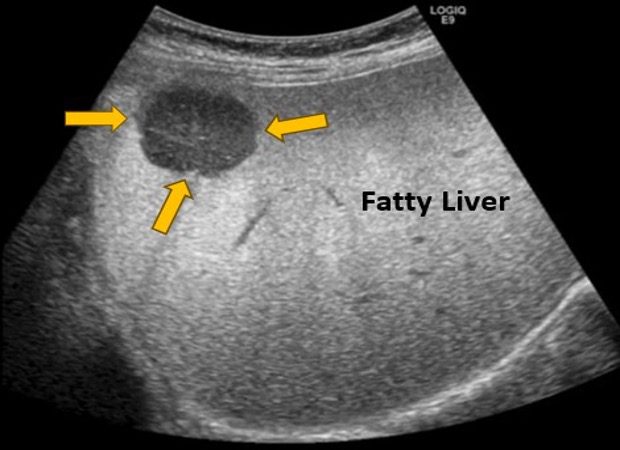
Liver Ultrasound For Fatty Liver Assessment
Fatty liver can develop when excess fat accumulates within liver cells. It may occur with metabolic conditions, weight-related factors, alcohol use, certain medications, or other causes.
Ultrasound may show changes in liver brightness that can be associated with fatty infiltration. However, the scan does not always determine the exact cause or severity of liver disease by itself.
Your healthcare provider may consider:
▪ Liver ultrasound findings
▪ Liver function tests
▪ Metabolic health
▪ Medical and medication history
▪ Alcohol intake where relevant
▪ Other risk factors
This broader assessment can help determine whether monitoring, lifestyle changes, additional testing, or specialist evaluation may be appropriate.
Evaluating Liver Enlargement And Structural Changes
An enlarged liver may occur for different reasons, ranging from temporary changes to underlying liver or systemic conditions. Ultrasound can measure the liver and assess its general structure.
During the examination, the sonographer may evaluate:
▪ Liver dimensions
▪ Surface and margins
▪ Internal tissue pattern
▪ Focal abnormalities
▪ Associated findings in the gallbladder and biliary system
If enlargement or another structural change is identified, your healthcare provider can interpret the result in relation to your symptoms and other clinical findings.
Doppler Ultrasound For Liver Blood Flow
In selected cases, a liver ultrasound may include Doppler imaging. Doppler technology helps assess the movement of blood through specific vessels. It can provide information about blood flow within vessels such as the portal vein and hepatic vessels. This may be useful when your doctor needs additional information about circulation through the liver.
Doppler assessment may be considered when there is a clinical concern involving:
▪ Portal circulation
▪ Hepatic blood vessels
▪ Abnormal vascular flow
▪ Certain chronic liver conditions
▪ Follow-up of known vascular findings
The need for Doppler depends on the clinical indication and the information required from the examination.
Checking The Gallbladder And Bile Ducts
A liver ultrasound often provides an opportunity to examine nearby hepatobiliary structures. The gallbladder and bile ducts can be assessed for structural changes that may contribute to abdominal symptoms.
The examination may help evaluate:
▪ Gallstones
▪ Gallbladder wall changes
▪ Bile duct enlargement
▪ Biliary obstruction-related findings
▪ Sludge or other internal changes
If a finding requires further clarification, your healthcare provider may recommend additional imaging or laboratory evaluation.
Liver Ultrasound For Abdominal Symptoms
Upper abdominal discomfort can have several possible causes. A liver ultrasound may be requested when symptoms suggest that the liver, gallbladder, or biliary system should be assessed.
Depending on the clinical situation, imaging may be considered for:
▪ Right upper abdominal discomfort
▪ Unexplained abdominal pain
▪ Bloating associated with other symptoms
▪ Jaundice
▪ Changes in appetite with other clinical findings
▪ Abnormal liver-related blood tests
Ultrasound is one part of the diagnostic process. Your healthcare provider may combine its findings with other tests to identify the most appropriate next step.
How To Prepare For A Liver Ultrasound ?
Preparation instructions can vary depending on the type of examination and the structures being assessed. In many cases, fasting for a specific period may be recommended because food and gas in the digestive tract can affect the quality of abdominal ultrasound images.
Before your appointment:
▪ Follow the fasting instructions provided by the hospital
▪ Take regular medicines only as advised
▪ Inform the healthcare team about relevant medical conditions
▪ Carry previous ultrasound or imaging reports if available
▪ Follow any additional preparation instructions given to you
If you have a condition that makes fasting difficult, discuss it with your healthcare provider before the examination.
Benefits Of Liver Ultrasound In Nagpur
Liver ultrasound offers a convenient way to examine the liver and nearby abdominal structures without using ionizing radiation. The examination is also useful for monitoring certain findings over time.
▪ Non-invasive examination with no surgical incision
▪ Uses sound waves instead of ionising radiation
▪ Helps assess liver size, shape, and internal appearance
▪ Can identify many structural changes within the liver
▪ Supports evaluation of suspected fatty liver
▪ Helps assess the gallbladder and bile ducts
▪ Doppler can provide additional information about liver blood flow when required
▪ Can support investigation of unexplained upper abdominal symptoms
▪ Useful for follow-up of selected liver and hepatobiliary conditions
▪ Usually requires little preparation beyond the instructions provided
▪ Generally involves no recovery period after a routine examination
▪ Can help doctors decide whether additional imaging or testing may be needed.
Recovery After Liver Ultrasound In Nagpur
Liver ultrasound is a non-invasive examination, so most people do not need a recovery period after the scan. Once the examination is complete, you can usually return to your regular activities without any special restrictions. If fasting was required before the ultrasound, your healthcare provider can advise you when to resume normal food and fluids. You may also be asked to follow specific instructions if the ultrasound was performed as part of a larger diagnostic assessment.
▪ No surgical wound or incision is involved
▪ No anaesthesia is usually required
▪ Normal activities can generally be resumed after the examination
▪ Eating and drinking can usually restart according to the provided instructions
▪ Follow-up depends on the ultrasound findings and your clinical condition
▪ Additional tests may be advised if an abnormality needs further evaluation
Your doctor can explain the findings and recommend the next steps based on your symptoms, medical history, blood tests, and ultrasound report.
Why Choose NNS Hospital For Liver Ultrasound?
At NNS Hospital, liver ultrasound can be incorporated into a coordinated diagnostic evaluation based on the patient’s symptoms and clinical needs. The hospital’s multispeciality environment allows imaging findings to be considered alongside other medical assessments when required.
The approach focuses on:
▪ Appropriate imaging based on clinical indications
▪ Careful assessment of liver and abdominal structures
▪ Doppler evaluation when clinically required
▪ Correlation with symptoms and laboratory findings
▪ Clear guidance regarding further evaluation
▪ Patient-focused communication throughout the diagnostic process
Under the guidance of Dr. Ritesh Nawkhare, the hospital supports structured evaluation for neurological and multispeciality healthcare needs, with diagnostic services contributing to a broader approach to patient care.
Frequently Asked Questions
Book a Consultation for Liver ultrasound in Nagpur
If your doctor has advised a liver ultrasound because of abdominal symptoms, abnormal liver test results, suspected fatty liver, or a known liver condition, timely imaging can provide useful information about the liver and surrounding structures. At NNS Hospital, the examination can be planned according to your clinical needs and the reason for the scan. Share your previous reports, prescriptions, and relevant medical history during your consultation so your healthcare team can understand your condition more completely.
▪ Discuss your symptoms and reason for imaging
▪ Review previous reports or liver-related investigations
▪ Receive appropriate preparation instructions
▪ Undergo the ultrasound as advised
▪ Understand the findings and recommended next steps
Schedule Your Liver Ultrasound
Take the next step toward understanding your liver health. Book a consultation for Liver Ultrasound In Nagpur and discuss the appropriate diagnostic evaluation with your healthcare provider.