
Spine Evaluation and Personalized Treatment with Tlif surgery By Dr.Ritesh Nawkhare
Lower back pain can make everyday activities such as sitting, walking, standing, and sleeping uncomfortable. Depending on the underlying condition, discomfort may remain in the lumbar region or spread to the buttocks and legs. Some patients also notice tingling, numbness, or reduced muscle strength when spinal nerves are affected If you are looking for TLIF Surgery in Hoshangabad, understanding the cause of your symptoms is an important first step. Transforaminal Lumbar Interbody Fusion (TLIF) is a specialized procedure used for certain lower spine conditions that require stabilization. However, surgery is not necessary for every case of back pain or disc problems. The right approach depends on the diagnosis, severity of symptoms, and response to previous treatment.
Dr. Ritesh Nawkhare holds MBBS, MS (General Surgery), and MCh (Neurosurgery) qualifications. Patients from Hoshangabad can enquire about a consultation at Neurosys Multispeciality Centre In Nagpur to discuss their concerns, review scan reports, and explore suitable treatment options. As the centre is located in Nagpur, please confirm appointment availability before travelling.
What Is TLIF Surgery?
TLIF stands for Transforaminal Lumbar Interbody Fusion. It is a surgical procedure used to treat certain conditions affecting the lumbar spine, which forms the lower part of your back. The procedure helps stabilise an affected spinal segment and may also relieve pressure on nearby nerves when decompression is necessary.
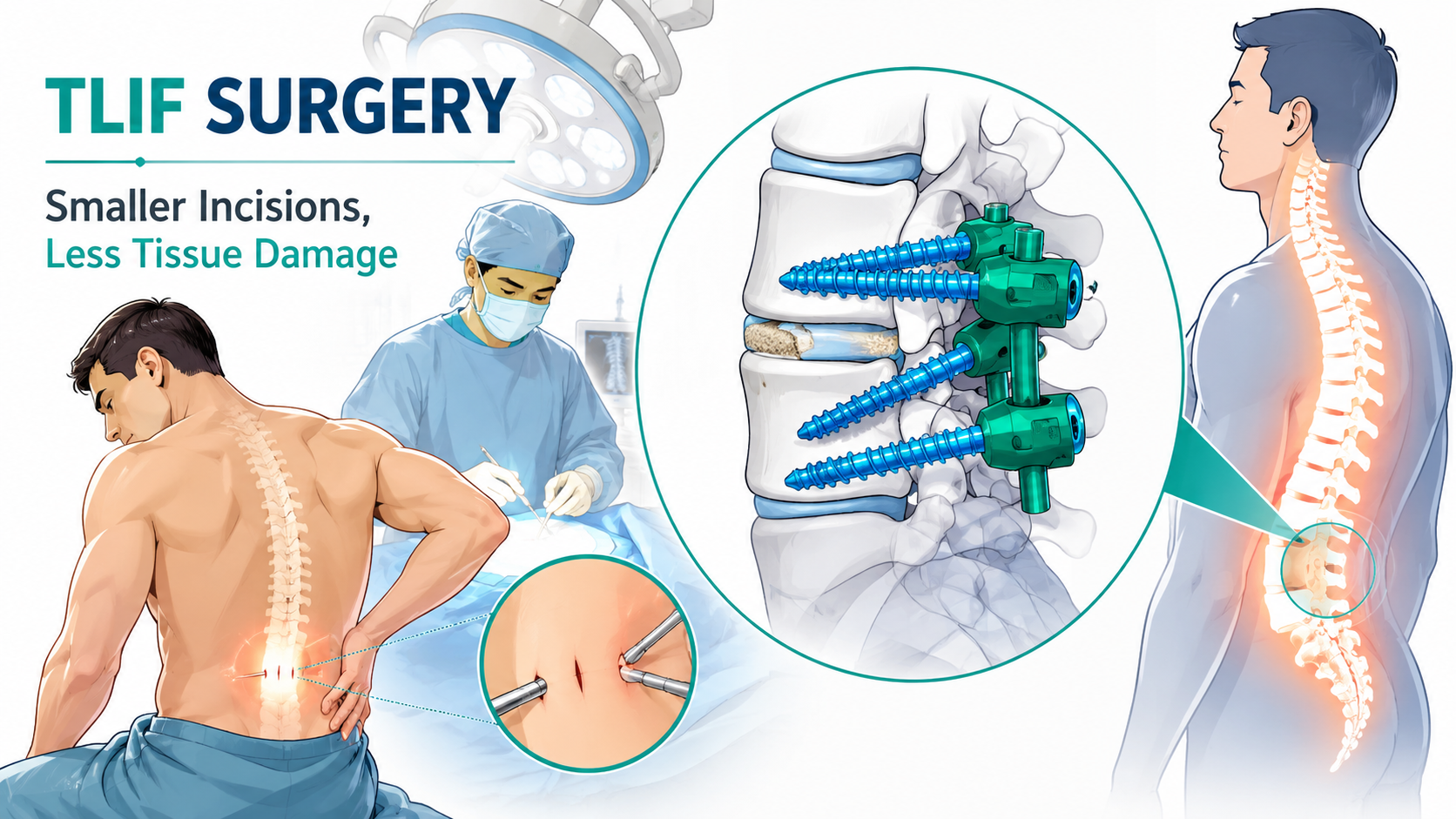
Your spine contains bones called vertebrae, with soft discs between them. These discs help absorb pressure and support movement. When a disc becomes damaged or a spinal segment loses stability, it may cause persistent pain or nerve-related symptoms. TLIF addresses selected structural problems by removing the affected disc material, placing an implant or bone graft between the vertebrae, and using fixation hardware to support the fusion process.
How Does TLIF Surgery Work?
During TLIF surgery, the surgeon reaches the affected disc through an approach from one side of the spine. The damaged disc material is removed, and the disc space is prepared for an implant or bone graft. Screws and rods are commonly used to hold the vertebrae steady while the bones gradually fuse.
The procedure may also include decompression when spinal nerves are under pressure. The exact surgical plan depends on the patient’s diagnosis, spinal anatomy, and overall health. Although TLIF can help selected patients, it does not guarantee complete relief from back pain or nerve symptoms.
What Are the Main Goals of TLIF?
The purpose of TLIF is to address a spinal problem that may not improve sufficiently with other treatments. The surgeon considers whether fusion is necessary and whether nerve decompression should also be performed.
▪ Stabilise a spinal segment affected by abnormal movement.
▪ Create more space around compressed nerves when required.
▪ Support fusion between the affected vertebrae.
▪ Address selected structural conditions associated with persistent symptoms.
The expected benefits vary from person to person. A specialist consultation helps patients understand why TLIF may be considered and whether another treatment could be more suitable.
Conditions That May Require TLIF Surgery
Several lumbar spine conditions can cause back pain, leg discomfort, and difficulty walking. TLIF surgery may be recommended when spinal stabilisation and nerve decompression are medically necessary.
1. Lumbar Disc Degeneration
Worn spinal discs may cause persistent back pain and stiffness. TLIF may help stabilise the affected segment in selected cases.
2. Spondylolisthesis
When one vertebra slips over another, it can cause back pain, numbness, or leg weakness. TLIF may provide stability when required.
3. Lumbar Spinal Stenosis
Narrowing around spinal nerves may cause leg pain and walking difficulties. TLIF may be considered when decompression and stabilisation are both needed.
4. Recurrent Disc Problems
A disc problem may return after previous surgery. TLIF may be suitable if the affected spinal segment also needs stabilisation.
5. Spinal Instability
Abnormal movement between vertebrae can cause back pain and nerve symptoms. TLIF may be considered after clinical evaluation confirms the need for fusion.
When Is TLIF Surgery Considered?
TLIF surgery may be recommended when a lumbar spine condition causes ongoing symptoms and the affected vertebrae require stabilisation. The specialist evaluates the severity of the problem, nerve involvement, and response to previous treatments before suggesting surgery.
▪ Persistent symptoms linked to spinal instability.
▪ Nerve compression that requires surgical decompression.
▪ Vertebral slippage affecting spinal alignment.
▪ Selected cases requiring fusion after previous spine surgery.
The final treatment plan depends on the patient’s examination, scan findings, overall health, and individual needs. Non-surgical options may remain appropriate when surgery is not necessary.
Risks and Limitations of TLIF Surgery
TLIF is a major operation and, like other surgeries, carries potential risks. Understanding these risks helps patients make informed decisions and prepare for recovery. The likelihood of complications varies according to the patient’s health, the complexity of the procedure, and other factors.
Possible complications include:
▪ Infection or bleeding.
▪ Blood clots or anaesthesia-related complications.
▪ Injury to a nerve or nearby structure.
▪ Leakage of cerebrospinal fluid in certain cases.
▪ Failure of the bones to fuse properly.
▪ Problems with implants or fixation hardware.
▪ Persistent pain or continuing neurological symptoms.
▪ The need for another operation.
Smoking, poor bone health, and certain medical conditions may affect healing. Before surgery, discuss individual risks, expected benefits, alternatives, and recovery requirements with the surgeon.
Recovery After TLIF Surgery
Recovery takes time, and each patient progresses at a different pace. The process depends on the condition being treated, the extent of surgery, general health, and the development of spinal fusion. The surgical team provides instructions about medicines, wound care, activity, and follow-up visits.
Immediately After Surgery
After the procedure, the medical team monitors the patient as the effects of anaesthesia wear off. Staff assess pain, movement, sensation, and other relevant signs. Medication may be provided to manage discomfort, and the team explains when and how to begin moving safely.
Walking and Early Movement
When the medical team considers it safe, the patient may begin standing or walking with assistance. Gradual movement helps reduce complications associated with prolonged bed rest. Patients should follow their individual instructions and avoid activities that have not been approved by the treating team.
How to Support Your Recovery After TLIF ?
Recovery involves more than the operation itself. Following medical advice and making suitable adjustments can help patients manage everyday activities while healing. The surgeon’s instructions should take priority because recovery needs vary from person to person.
Follow Activity Restrictions
The surgeon may recommend limiting heavy lifting, repeated bending, and twisting during the early recovery period. These restrictions depend on the operation and the patient’s progress. Increase activity gradually and ask for medical guidance before returning to strenuous work, driving, or exercise.
TLIF Surgery Compared With Other Spine Treatments
TLIF is one of several treatments for lumbar spine problems. The right option depends on the diagnosis, symptoms, and need for spinal stabilisation.
1.Medication and Physiotherapy
Medication, physiotherapy, and activity modification may relieve symptoms and improve movement. These treatments may be suitable when surgery is not necessary.
2.Spinal Decompression
Decompression surgery relieves pressure on spinal nerves. It may be performed alone or combined with TLIF when the spine also requires stabilisation.
3.Other Spinal Fusion Procedures
Different fusion techniques address specific spinal conditions. The surgeon recommends the most appropriate procedure based on the patient’s needs, spinal anatomy, and potential benefits and risks.
Planning a TLIF Consultation From Hoshangabad to Nagpur
Patients from Hoshangabad who are considering specialist spine care can contact Neurosys Multispeciality Centre In Nagpur to enquire about an appointment with Dr. Ritesh Nawkhare. Since the hospital is located in Nagpur, confirm consultation availability and travel arrangements before leaving Hoshangabad.
Documents to Bring
Having previous medical records available can help the specialist understand your condition. Bring the following documents if you have them:
▪ Previous MRI, CT, and X-ray reports, along with available scan images.
▪ Prescriptions and details of current medicines.
▪ Records of previous spinal procedures or consultations.
▪ Details of physiotherapy and other treatments already tried.
▪ Information about existing medical conditions and medicine allergies.
These records may help the doctor assess the problem and determine whether additional investigations are needed.
Questions to Ask During Your Appointment
A consultation helps you understand your spinal condition and explore suitable treatment options. You can discuss the following questions with the specialist:
▪ What is causing my back pain or leg symptoms?
▪ Do my scan findings explain my symptoms?
▪ Can non-surgical treatment help my condition?
▪ Why might TLIF surgery be suitable for me?
▪ What are the possible risks and alternatives?
▪ What restrictions and follow-up care should I expect after surgery?
These discussions help you understand the recommended approach and make an informed decision based on your medical needs.
Why Consult Dr. Ritesh Nawkhare for Spine Evaluation?
Dr. Ritesh Nawkhare holds MBBS, MS (General Surgery), and MCh (Neurosurgery) qualifications. At Neurosys Multispeciality Centre In Nagpur, patients can enquire about evaluation for conditions affecting the spine, spinal cord, and nerves. A consultation can help patients understand their diagnosis and explore appropriate treatment options.
For patients considering TLIF Surgery in Hoshangabad, the aim is to establish whether spinal fusion is suitable or whether another treatment may be more appropriate. Every recommendation should reflect the patient’s symptoms, medical history, examination, and investigations.
▪ Symptom assessment to understand pain patterns and nerve-related complaints.
▪ Neurological examination to assess muscle strength, sensation, reflexes, and walking.
▪ Review of relevant MRI, CT, and X-ray reports.
▪ Discussion of non-surgical treatment and other surgical options when appropriate.
▪ Individualised planning based on the patient’s diagnosis and general health.
Patients should have the opportunity to ask questions about the proposed treatment, possible risks, and recovery before making a decision.
Frequently Asked Questions - Tlif Surgery in Hoshangabad
Book A Consultation With Tlif Surgery in Hoshangabad
Persistent back pain, leg discomfort, or difficulty walking can affect your everyday life. If you are looking for TLIF Surgery in Hoshangabad, consult Dr. Ritesh Nawkhare at Neurosys Multispeciality Centre In Nagpur for specialist evaluation of your spinal condition.
▪ Discuss your symptoms and previous treatments.
▪ Review your MRI, CT, or X-ray reports.
▪ Understand suitable non-surgical and surgical options.
▪ Learn about TLIF surgery, potential risks, and recovery.
Treatment recommendations depend on your diagnosis and individual needs. Contact the hospital to enquire about an appointment and confirm availability before travelling from Hoshangabad to Nagpur.