
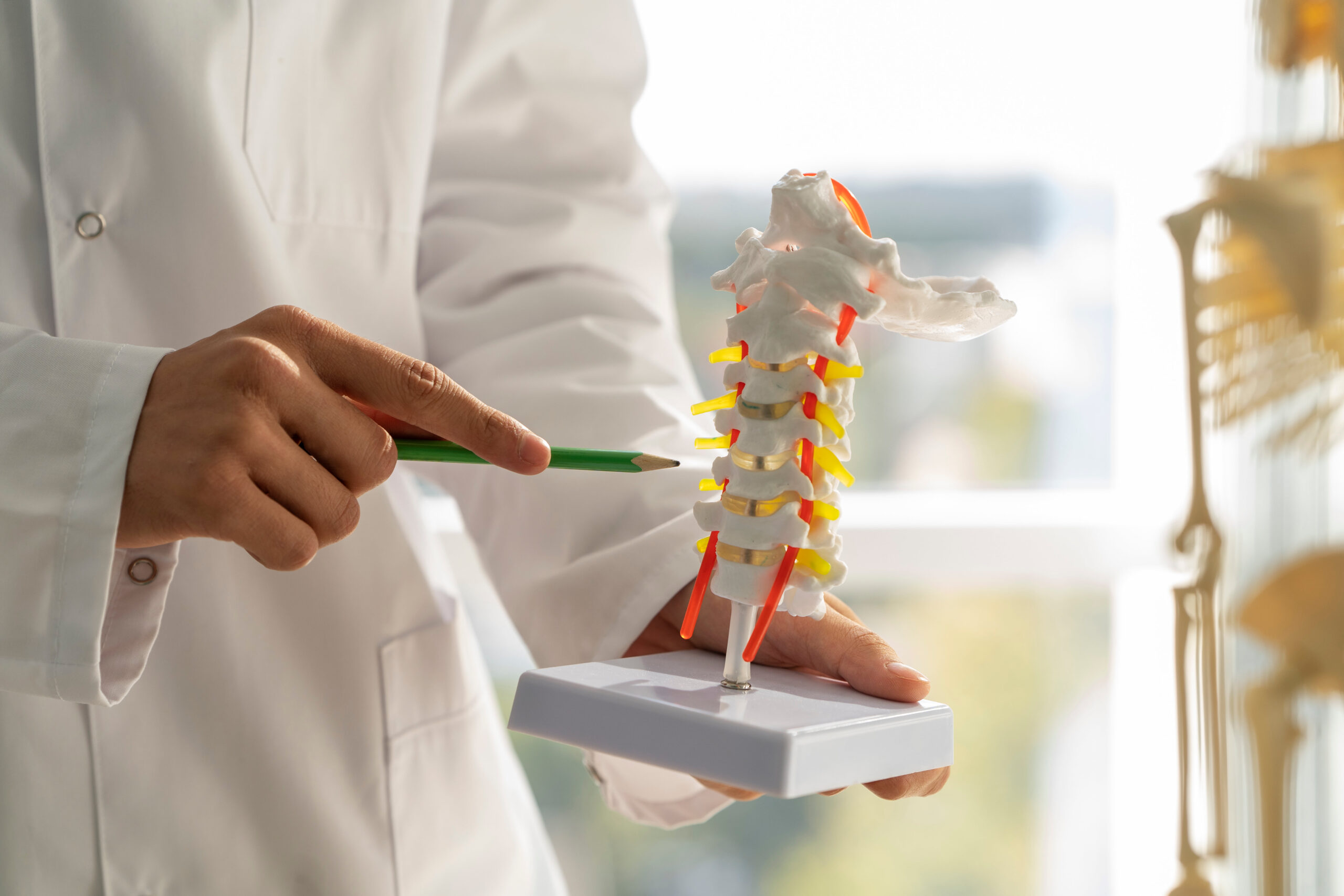
Specialist Spine Care And Treatment In Rajangaon By Dr.Ritesh Nawkhare
Spinal disorders can affect much more than the back or neck. Pain may begin in one area and gradually extend into the shoulder, arm, buttock, thigh, or leg. Some patients notice pins and needles, reduced sensation, muscle weakness, stiffness, restricted movement, or changes in walking. These symptoms may develop because of disc-related problems, narrowing around the nerves, spinal instability, degenerative changes, injury, or pressure on the spinal cord. Since several conditions can produce similar complaints, identifying the actual source of symptoms is an important part of effective spine care. If you are searching for a Spine Surgeon In Rajangaon, Dr. Ritesh Nawkhare provides evaluation for a range of cervical, thoracic, and lumbar spine conditions. The assessment begins with a detailed discussion about the nature, duration, location, and progression of symptoms. Previous treatment, medical history, injuries, physical limitations, and neurological complaints are also considered. A clinical examination helps assess strength, sensation.
Understanding The Cause Behind Spine Symptoms
A spine problem does not always present in the same way. A disc abnormality may cause local back or neck discomfort in one patient and nerve-related leg or arm symptoms in another. Similarly, spinal narrowing can remain relatively mild in some people but cause significant neurological symptoms when a nerve or the spinal cord becomes compressed.
The evaluation therefore looks beyond the location of pain. Dr. Ritesh Nawkhare considers how symptoms behave during sitting, standing, walking, bending, lifting, or other activities. Their relationship with neurological findings and imaging can help identify whether the problem is primarily mechanical, nerve-related, structural, or a combination of these factors.
Spine Conditions Evaluated By Dr. Ritesh Nawkhare
A Spine Surgeon In Rajangaon may evaluate several conditions affecting the vertebrae, discs, nerves, and spinal cord.
Common problems include:
▪ Cervical disc herniation and degenerative cervical disorders
▪ Lumbar disc herniation and disc-related nerve compression
▪ Cervical and lumbar spinal stenosis
▪ Sciatica and lumbar radiculopathy
▪ Cervical radiculopathy with arm symptoms
▪ Degenerative disc disease
▪ Spondylolisthesis and vertebral slippage
▪ Spinal instability
▪ Selected spinal fractures and traumatic conditions
▪ Conditions causing spinal cord compression
▪ Recurrent symptoms following previous spine treatment
The presence of one of these conditions does not automatically indicate surgery. The severity of symptoms, neurological status, structural findings, progression, and response to earlier treatment all influence the management plan.
Symptoms That Should Not Be Ignored By Spine Surgeon in Rajangaon
Occasional back discomfort may improve with rest and appropriate conservative care. Persistent or worsening symptoms require greater attention, particularly when neurological changes accompany the pain.
A spine assessment may be appropriate when you experience:
▪ Back or neck pain that continues despite treatment
▪ Pain extending into an arm, buttock, or leg
▪ Persistent tingling, numbness, or altered sensation
▪ Weakness in an arm or leg
▪ Difficulty walking or maintaining balance
▪ Reduced range of spinal movement
▪ Repeated episodes of severe radiating pain
▪ Symptoms that interfere with work, sleep, or routine activities
▪ New symptoms after a spinal injury
▪ Progressive neurological changes
The pattern and progression of these symptoms can provide important clues about the structures involved. Prompt assessment becomes particularly important when weakness or significant difficulty with walking develops.
How A Spine Evaluation Is Performed ?
A detailed spine consultation combines clinical information rather than relying on one symptom or one scan. Dr. Ritesh Nawkhare first discusses the patient’s complaints and their effect on everyday activities. Understanding when symptoms began and how they have changed can help distinguish an acute problem from a long-standing degenerative condition.
The neurological examination may include assessment of muscle power, sensation, reflexes, coordination, gait, and other relevant functions. The examination can help identify whether a particular nerve root or the spinal cord may be involved.
Previous treatment is also reviewed. This may include medicines, physiotherapy, exercises, injections, activity modification, or earlier surgery. The response to these measures can help determine the next appropriate step.
Importance Of MRI, CT And X-Ray By Spine Surgeon in Rajangaon
Different imaging methods provide different types of information about the spine. X-rays can help assess alignment, vertebral structure, movement, and certain degenerative or traumatic changes. CT scans can provide detailed information about bone structures and may be particularly useful for selected fractures or complex anatomical findings. MRI can provide detailed views of discs, nerves, the spinal cord, and other soft tissues.
However, imaging should be interpreted within the clinical context. A disc bulge, degeneration, or narrowing seen on an MRI does not necessarily mean that it is responsible for the patient’s symptoms.
Dr. Ritesh Nawkhare correlates imaging with the neurological examination, symptom pattern, medical history, and progression of the condition. This approach helps avoid making treatment decisions based only on an isolated radiology finding.
Non-Surgical Treatment By Spine Surgeon in Rajangaon
Surgery is only one part of spine care. Many patients can be managed initially through appropriate non-surgical measures, depending on the underlying diagnosis.
Treatment may include:
▪ Medicines prescribed according to the condition
▪ Physiotherapy and targeted exercises
▪ Rehabilitation to improve movement and strength
▪ Activity modification
▪ Posture and ergonomic guidance
▪ Monitoring of stable conditions
▪ Follow-up assessment to evaluate progress
▪ Additional investigations when clinically indicated
The purpose of conservative treatment is not simply to reduce pain temporarily. It may also help improve movement, function, strength, and confidence with daily activities when the condition is suitable for non-operative care.
When Can Spine Surgery Be Considered?
Surgical treatment may become appropriate when a structural spinal problem produces significant symptoms and conservative management does not provide adequate improvement. It may also be considered when there is substantial nerve compression, progressive neurological weakness, spinal cord compression, instability, certain traumatic conditions, or another clearly defined surgical indication.
The decision requires individual assessment. A patient with an abnormal MRI may not require surgery if symptoms are mild, stable, or unrelated to the imaging finding. Conversely, persistent neurological symptoms with corresponding structural compression may require more detailed surgical discussion.
Dr. Ritesh Nawkhare reviews the clinical findings, imaging, previous treatment, general health, and expected treatment goals before discussing an operative approach.
Selected Spine Surgical Procedures By Spine Surgeon in Rajangaon
The procedure depends on the spinal condition, affected region, nerve involvement, and structural changes.
1.Discectomy
Removes herniated disc material that is compressing a spinal nerve and causing significant symptoms.
2.Decompression Surgery
Relieves pressure around a compressed nerve or spinal cord to create more space for neural structures.
3.Laminectomy
Removes part of the vertebral bone to relieve spinal canal narrowing or pressure on the nerves or spinal cord.
4.Spinal Fusion
Stabilizes an unstable spinal segment when vertebral movement or structural problems require additional support.
Recovery And Rehabilitation After Spine Treatment
Recovery varies according to the underlying diagnosis and the treatment performed. Patients undergoing surgery may need a period of controlled activity before gradually returning to normal movement. The recovery process can also depend on the duration of nerve compression, neurological involvement, overall health, age, spinal condition, and rehabilitation progress.
Rehabilitation may focus on improving mobility, muscle strength, flexibility, balance, posture, and functional independence. The timing and intensity of exercises should be appropriate for the specific procedure and healing stage.
Patients should follow their surgeon’s individual instructions regarding activity, lifting, exercise, wound care, medications, and follow-up appointments.
Spine Care Without A Surgery-First Approach
A major part of responsible spine treatment involves determining whether an operation is actually necessary. Some patients improve with structured conservative management, while others may eventually require surgery because of persistent symptoms or progressive neurological problems.
Dr. Ritesh Nawkhare evaluates the complete clinical picture before recommending an invasive procedure. When surgery is appropriate, the discussion includes its purpose, expected benefits, potential limitations, possible complications, alternatives, and recovery requirements.
This allows patients to understand why a particular treatment is being considered rather than making a decision based solely on the presence of an abnormal scan.
Why Choose Dr. Ritesh Nawkhare - Spine Surgeon in Rajangaon ?
Dr. Ritesh Nawkhare is qualified with MBBS, MS (General Surgery), and MCh (Neurosurgery). His approach to spine care combines clinical assessment with appropriate imaging and consideration of the patient’s functional needs.
His evaluation focuses on:
▪ Understanding the source and progression of symptoms
▪ Performing a relevant neurological examination
▪ Correlating MRI, CT, or X-ray findings with clinical findings
▪ Assessing nerve and spinal cord involvement
▪ Considering spinal alignment and stability
▪ Reviewing previous treatments and their response
▪ Identifying appropriate non-surgical options
▪ Discussing surgery when a clear clinical indication exists
▪ Explaining treatment expectations and recovery considerations
The objective is to select an approach that matches the patient’s diagnosis rather than applying the same treatment to every spine condition.
Preparing For Your Spine Consultation By Spine Surgeon in Rajangaon
Bring your previous MRI, CT, or X-ray reports and imaging whenever available. Details of earlier treatment can also be useful, including medicines, physiotherapy, injections, previous hospital visits, or spine surgery.
Before your appointment, it can help to note when your symptoms started, whether they have become more frequent or severe, and whether pain travels into an arm or leg. Mention any numbness, weakness, balance changes, or difficulty with routine activities.
This information can help create a clearer picture of the condition during the consultation.
Frequently Asked Questions - Spine Surgeon in Rajangaon
Book A Consultation With Spine Surgeon in Rajangaon
Persistent back or neck symptoms can affect mobility, work, sleep, and quality of life. When pain continues, spreads into an arm or leg, or occurs with numbness, weakness, balance changes, or walking difficulty, a detailed evaluation can help identify the underlying problem.
Dr. Ritesh Nawkhare assesses symptoms, medical history, neurological findings, and relevant imaging before recommending a treatment pathway. Depending on the diagnosis, this may involve conservative care, rehabilitation, monitoring, additional investigations, or surgery when clinically appropriate.
Book a consultation for Spine Surgeon In Rajangaon to understand the cause of your symptoms, discuss available treatment options, and make an informed decision about your spine care.