
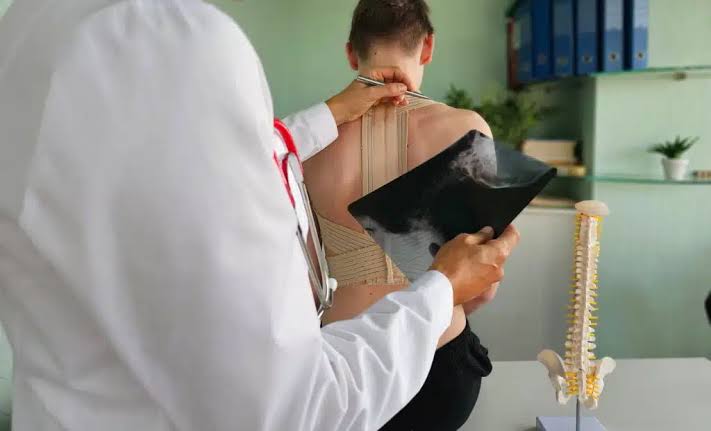
Advanced Spine Evaluation for Back, Neck, Nerve and Spinal Conditions
Spinal conditions can affect your movement, muscle strength, sensation, posture, and ability to perform everyday activities. Therefore, if you need a Spine Specialist in Jabalpur, Dr. Ritesh Nawkhare provides specialist evaluation for conditions involving the back, neck, spinal cord, and nerves. During the initial consultation, he carefully reviews your symptoms, medical history, neurological examination findings, and relevant investigation reports to understand the possible cause of your discomfort. Moreover, since different spinal conditions can produce similar symptoms, identifying the underlying problem is essential before recommending an appropriate treatment plan. Common warning signs of spinal conditions include persistent back or neck pain, stiffness, numbness, tingling sensations, and muscle weakness. Additionally, discomfort may sometimes travel from the spine into an arm, shoulder, buttock, or leg. In some cases, patients may also experience balance difficulties, reduced flexibility, and changes in walking when certain spinal structures or nerves are affected.
Comprehensive Spine Evaluation by a Spine Specialist in Jabalpur
A detailed spine assessment begins with understanding how your symptoms affect your daily life. Initially, information about the location, duration, intensity, and pattern of discomfort provides important clinical clues. During your consultation, Dr. Ritesh Nawkhare carefully evaluates several factors to identify possible spinal problems and understand their impact on your mobility. Furthermore, this assessment helps determine whether your symptoms may be related to muscles, joints, spinal discs, or nerves.
The spine assessment may include:
Location, duration, and intensity of pain.
Pain spreading into the arms, hands, legs, or feet.
Numbness, tingling, or changes in sensation.
Muscle weakness or reduced physical strength.
Changes in walking, posture, or balance.
Previous injuries, spinal conditions, or medical history.
Earlier treatments and their results.
MRI, CT scan, X-ray, and other relevant investigation reports. In addition to reviewing your medical history, a neurological examination helps assess muscle strength, reflexes, sensation, and movement.
Understanding Spine-Related Symptoms with a Spine Specialist in Jabalpur
Back and neck symptoms can develop due to several underlying problems. Moreover, similar complaints may be associated with different spinal conditions. These issues can involve disc degeneration, nerve compression, spinal canal narrowing, spinal cord involvement, previous injuries, or structural abnormalities. Therefore, identifying the exact cause is an important step towards selecting appropriate treatment.
During a consultation, a Spine Specialist in Jabalpur may evaluate whether your symptoms are related to the following conditions:
Cervical spine disorders affecting the neck.
Lumbar spine conditions involving the lower back.
Herniated, bulging, or degenerative spinal discs.
Nerve compression and irritation.
Spinal canal narrowing (spinal stenosis).
Spinal cord compression.
Selected spinal injuries and fractures.
Structural abnormalities identified through imaging.
Neurological symptoms associated with spinal disorders. In addition to reviewing your symptoms, a detailed clinical examination may involve checking your posture, spinal flexibility, muscle strength, reflexes, sensation, and walking pattern. Furthermore, these observations help identify possible problems affecting spinal stability, movement, or nerve function.
Cervical Spine Problems and Neck-Related Symptoms
The cervical spine is an important part of the neck. It supports head movement while protecting the spinal cord and nearby nerves. However, problems in this region can cause more than neck discomfort. Depending on the affected nerves or spinal cord, symptoms may spread towards the shoulders, arms, and hands. In some cases, patients may also experience changes in balance and coordination.
Common symptoms of cervical spine conditions include:
Persistent neck pain, stiffness, or restricted movement.
Pain spreading from the neck towards the shoulder or arm.
Tingling, numbness, or unusual sensations in the fingers.
Reduced strength in the arm, wrist, or hand.
Difficulty gripping objects or performing daily activities.
Poor hand coordination and difficulty with fine movements.
Balance problems or difficulty walking steadily.
Pain or discomfort that increases during certain neck movements. Several conditions may contribute to these symptoms. For example, a herniated cervical disc can press on nearby nerves and cause pain or numbness in the arm. Similarly, cervical spondylosis may develop due to age-related changes in the spinal discs and joints. Spinal canal narrowing can also place pressure on the spinal cord.
Lumbar Spine Problems and Lower-Back Symptoms
The lower back, also known as the lumbar spine, supports much of the body’s weight during everyday activities such as standing, walking, bending, and lifting. However, when this region develops a problem, discomfort may remain in the lower back or spread towards the buttock, thigh, or leg. In addition, certain lumbar conditions can affect mobility, sleep, and the ability to perform routine tasks.
Common symptoms of lumbar spine conditions include:
Persistent pain or stiffness in the lower back.
Pain spreading towards the buttock, thigh, or leg.
Tingling, numbness, or burning sensations in the legs or feet.
Muscle weakness in one or both legs.
Difficulty standing or walking for extended periods.
Reduced flexibility and difficulty changing positions.
Pain that increases during bending, lifting, or prolonged sitting.
Difficulty getting up from a chair or straightening the back. Several spinal conditions can contribute to these symptoms. For instance, a lumbar disc herniation may irritate or compress a nearby nerve, causing pain that travels down the leg. Similarly, age-related disc changes may contribute to lumbar spondylosis. In some patients, spinal canal narrowing can put pressure on the nerves and cause discomfort or weakness while walking.
Disc-Related Spine Conditions
The lower back supports the body during everyday activities such as standing, walking, bending, and lifting. When the lumbar spine develops a problem, discomfort may remain in the lower back or spread towards the buttock, thigh, or leg. In addition, persistent symptoms can affect sleep, reduce physical activity, and make routine movements difficult.
Depending on the underlying cause, common symptoms may include:
Persistent lower-back pain or stiffness.
Pain travelling into the buttock, thigh, or leg.
Numbness, tingling, or burning sensations in the legs or feet.
Weakness in one or both legs.
Difficulty standing or walking for longer periods.
Reduced flexibility and changes in normal movement.
Pain that increases with certain positions or activities.
Discomfort while bending, lifting, or changing positions. Certain lumbar conditions can interfere with the normal functioning of nearby nerves. For example, a slipped or herniated disc may press on a nerve and cause pain that travels down the leg. Similarly, lumbar spinal stenosis can narrow the spinal canal and contribute to leg pain, numbness, or weakness, particularly while standing or walking.
Nerve Compression and Radiating Pain
Pain that travels from the neck towards the arm or from the lower back into the leg may occur when a spinal nerve becomes irritated or compressed. This condition can affect normal nerve function and cause discomfort beyond the affected spinal region. Moreover, the symptoms may interfere with everyday activities such as walking, lifting, gripping objects, and sitting comfortably.
Common signs of spinal nerve compression include:
Burning, shooting, or electric-like pain.
Tingling sensations in the arms, hands, legs, or feet.
Numbness or reduced sensation in the affected area.
Muscle weakness in the arms or legs.
Changes in reflex responses.
Difficulty performing certain movements.
Pain that increases during coughing, sneezing, or specific activities.
Reduced coordination or difficulty maintaining balance. Several spinal conditions can put pressure on nearby nerves. For example, a herniated disc may push against a nerve root and cause pain that travels along the arm or leg. Similarly, bone spurs associated with cervical or lumbar spondylosis may reduce the space available for nerves.
Stenosis and Narrowing of the Spinal Canal
Spinal stenosis develops when the space available for the spinal cord or nearby nerves becomes narrower. This narrowing can occur in the cervical spine (neck) or lumbar spine (lower back). Depending on its location and severity, the condition may cause pain, restricted movement, and changes in nerve function. In some patients, symptoms develop gradually and become more noticeable over time.
Common symptoms of spinal stenosis include:
Pain or stiffness in the neck or lower back.
Pain extending into the arms, shoulders, buttocks, or legs.
Numbness or tingling sensations in the hands or feet.
Muscle weakness in the affected limbs.
Difficulty standing or walking for longer periods.
Leg pain or heaviness that changes with posture or activity.
Difficulty maintaining balance or coordination.
Reduced sensation or difficulty performing certain movements. Several factors can contribute to spinal stenosis. Age-related changes are among the common causes.
Symptoms Associated With Spinal Cord Problems
The spinal cord carries important nerve signals between the brain and the rest of the body. When a spinal condition puts pressure on this structure, it may affect muscle strength, sensation, coordination, balance, and walking ability. Depending on the location and severity of compression, symptoms may develop gradually or become noticeable over a shorter period.
Common warning signs of spinal cord compression include:
Progressive weakness in the arms or legs.
Increasing difficulty walking or standing steadily.
Changes in balance and body coordination.
Numbness or tingling affecting different body areas.
Reduced hand coordination and control.
Difficulty holding objects or performing fine movements.
Stiffness or unusual sensations in the arms and legs.
Changes in normal walking patterns.
Difficulty with everyday activities that require controlled movements. Several spinal problems may cause pressure on the spinal cord. For example, cervical spinal stenosis can reduce the space available for the cord in the neck. Similarly, a large herniated disc, bone spurs, or age-related spinal changes may contribute to compression.
Spine Injuries and Post-Traumatic Symptoms
Spinal symptoms may develop after an accident, fall, sports injury, or another form of trauma. However, the severity of an injury cannot always be judged by the level of pain alone. In particular, the presence of numbness, tingling, or muscle weakness may indicate possible nerve involvement. Depending on the nature of the trauma, damage can affect the vertebrae, spinal discs, supporting ligaments, nerves, or spinal cord.
Following an injury, patients may experience different symptoms depending on the affected spinal region. These may include:
Neck or lower-back pain after an accident.
Tenderness or stiffness around the injured area.
Pain spreading towards the arms or legs.
Numbness, tingling, or altered sensation.
Weakness in the arms, hands, or legs.
Difficulty standing, walking, or changing positions.
Reduced spinal movement or flexibility.
Changes in balance or coordination.
MRI and CT Scan Evaluation
MRI, CT scans, and X-rays play an important role in evaluating different spinal conditions. These investigations help doctors identify structural changes that may contribute to back pain, neck pain, nerve compression, or restricted movement. However, each imaging method provides different information and is selected according to the patient’s symptoms and clinical requirements.
Understanding Different Spine Imaging Tests
MRI Scan: Magnetic Resonance Imaging provides detailed images of spinal discs, nerves, the spinal cord, and surrounding soft tissues. It can help identify herniated discs, nerve compression, spinal stenosis, and other soft-tissue abnormalities.
CT Scan: Computed Tomography provides detailed cross-sectional images of spinal bones. It is particularly useful for evaluating fractures, bone abnormalities, and complex spinal injuries.
X-ray: This investigation helps assess spinal alignment, vertebral position, and certain bone-related changes. It may also help identify some fractures and degenerative changes. Imaging findings are important, but they do not independently determine the diagnosis or treatment. Therefore, Dr. Ritesh Nawkhare considers scan reports alongside symptoms, medical history, and physical examination findings.
When Should You Consult a Spine Specialist in Jabalpur?
A spine consultation may be helpful when neck or back symptoms persist, return frequently, or begin to interfere with daily activities. The nature, duration, and progression of discomfort can help determine whether specialist evaluation is necessary. Even mild symptoms deserve attention if they gradually affect mobility, sleep, or physical activity.
Consider consulting a Spine Specialist in Jabalpur for the following concerns:
Back or neck pain that does not improve.
Pain travelling from the neck into an arm or from the lower back into a leg.
Persistent numbness, tingling, or burning sensations.
Unexplained weakness in the arms, hands, or legs.
Difficulty walking, standing, or maintaining balance.
Repeated episodes of spine-related discomfort.
Pain or restricted movement following a spinal injury.
Abnormal MRI, CT scan, or X-ray findings that need clinical assessment.
Suspected nerve compression or spinal cord involvement.
Reduced flexibility affecting everyday activities. Early evaluation can help identify the possible.
Why Choose Neurosys Multispeciality Centre ?
Dr. Ritesh Nawkhare provides personalised spine and neurological evaluation based on each patient’s symptoms, physical examination, medical history, and relevant investigation reports. His approach focuses on understanding the underlying condition and identifying a suitable care pathway. Moreover, patients receive guidance about their diagnosis and available treatment options.
Key aspects of consultation and patient care include:
Specialist spine and neurosurgical evaluation.
Detailed clinical and neurological assessment.
Review of MRI, CT scans, X-rays, and other investigation reports.
Evaluation of spinal, nerve, and spinal cord conditions.
Non-surgical treatment options when appropriate.
Surgical evaluation when clinically necessary.
Clear explanations of diagnosis and treatment choices.
Individualised treatment planning.
Follow-up and recovery guidance. Every spinal condition requires an individual assessment because symptoms and treatment requirements vary from person to person. For example, a patient with a herniated disc may need a different treatment approach from someone experiencing spinal stenosis or nerve compression.
Frequently Asked Questions – Spine Specialist in Jabalpur
Consult a specialist for persistent back or neck pain, radiating pain, numbness, tingling, weakness, balance changes, or difficulty walking.
No. The doctor first evaluates your symptoms, examination findings, and reports before discussing suitable treatment options.
Yes. Imaging findings are reviewed alongside your symptoms and examination to understand their clinical significance.
Evaluation may include disc problems, nerve compression, spinal stenosis, cervical or lumbar conditions, spinal cord compression, and selected spinal injuries.
Yes. Some conditions may mainly cause numbness, tingling, weakness, balance problems, or movement changes.
Book a Consultation for Spine Specialist In Jabalpur
If you are searching for a Spine Specialist in Jabalpur, Dr. Ritesh Nawkhare can provide specialist evaluation for a range of spine, nerve, and spinal cord concerns. A consultation can help you understand persistent or unexplained symptoms and identify the next appropriate step. Do not rely only on symptoms to determine the cause. Spine problems can present differently in different people. A clinical assessment brings together your symptoms, physical and neurological examination findings, medical history, and relevant investigation reports. Bring your previous MRI, CT, X-ray reports, prescriptions, and medication details to the consultation. This information can help create a more complete picture of your condition and support personalized treatment planning. Depending on your symptoms and findings, your care may involve conservative management, rehabilitation, further investigation, monitoring, or a surgical opinion when clinically appropriate.