
Specialist Care for Parkinson's Disease In Nagpur With Dr.Ritesh Nawkhare
Parkinson’s disease can affect much more than movement. It may also influence sleep, mood, thinking, speech, balance, and everyday activities. Because the symptoms often develop slowly, early changes may be easy to overlook. You may notice a slight tremor in one hand, slower movements, muscle stiffness, changes in walking, or difficulty maintaining balance. Every person’s experience with Parkinson’s disease is different. At Neurosys Multispeciality Centre in Nagpur, Dr. Ritesh Nawkhare takes time to understand your symptoms, medical history, movement patterns, and daily concerns. This detailed evaluation helps identify the possible cause of your symptoms and plan suitable care and follow-up.
Understanding Parkinson's Disease
Parkinson’s disease occurs when certain nerve cells in the brain become damaged or are lost. These cells help produce dopamine, a chemical messenger that supports smooth and controlled movement. When dopamine levels decrease, movement and coordination may become more difficult. Parkinson’s disease does not look the same in everyone. Some people mainly experience tremors, while others notice stiffness, slow movements, walking difficulties, or balance problems. Symptoms that do not directly affect movement may also occur.
At Neurosys Multispeciality Centre in Nagpur, the focus is on understanding the complete pattern of your symptoms rather than looking at just one concern. Knowing when the symptoms began and how they affect your daily life helps guide the neurological assessment.
Early Signs of Parkinson's Disease
The early signs of Parkinson’s disease can be mild and may develop gradually. Some people first notice changes on one side of the body. Others may observe changes in handwriting, walking, facial expression, speech, or the speed of routine activities.
Possible early signs include:
• Tremor or shaking, especially when the limb is at rest
• Slower movement than usual
• Muscle stiffness or rigidity
• Smaller or less expressive handwriting
• Reduced arm swing while walking
• Changes in posture
• Difficulty turning or getting up from a chair
• Softer or less clear speech
• Reduced facial expression
• Changes in balance or walking pattern
These symptoms can also occur due to other health conditions. That is why it is important to have them assessed by a neurological specialist before assuming that they are caused by Parkinson’s disease.
Motor Symptoms of Parkinson's Disease
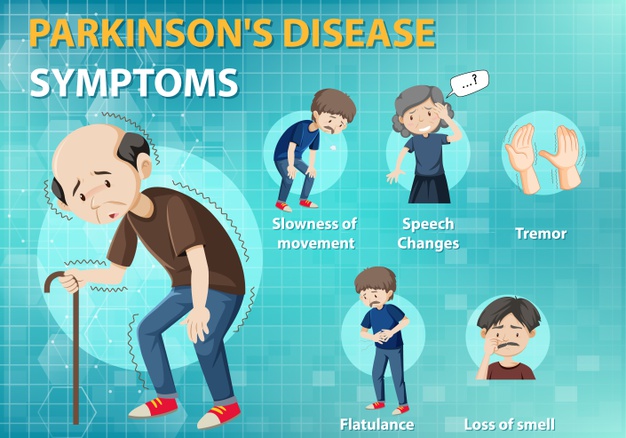
Motor symptoms are changes that directly affect movement. Tremor, stiffness, bradykinesia, and balance difficulties are commonly associated with Parkinson’s disease, but their severity and combination can vary from person to person.
Bradykinesia, or slowness of movement, may make everyday tasks take longer. You may find it harder to dress, eat, write, walk, or complete other familiar activities at your usual pace. Muscle stiffness can make movement feel uncomfortable or restricted.
Walking may also change. Your steps may become shorter, turning may take more time, or your feet may feel difficult to move. Balance problems may develop in some people as the condition progresses.
At Neurosys Multispeciality Centre in Nagpur, these movement changes are assessed along with your overall neurological health.
Non-Motor Symptoms of Parkinson's Disease
Parkinson’s disease can also cause symptoms that are not directly related to movement. These symptoms may appear before noticeable movement changes or develop later.
Non-motor symptoms can include:
• Sleep disturbances
• Constipation
• Changes in the sense of smell
• Fatigue
• Mood changes
• Anxiety or depression
• Blood pressure changes
• Urinary symptoms
• Cognitive changes
• Speech or swallowing difficulties
Not everyone experiences these symptoms, and they may have other causes as well. Sharing these concerns during your consultation can help provide a more complete picture of your health.
What Causes Parkinson's Disease?
The exact cause of Parkinson’s disease is not fully understood. The condition involves changes and loss of specific nerve cells in the brain. Researchers believe that a combination of genetic and environmental factors may contribute to its development. Age is an important risk factor, although Parkinson’s disease can also occur at a younger age. A family history may increase the risk for some people. Several other conditions can cause symptoms similar to Parkinson’s disease. A detailed neurological assessment helps distinguish between these possibilities and supports a more accurate diagnosis.
How Is Parkinson's Disease Diagnosed?
There is no single test that confirms every case of Parkinson’s disease. Diagnosis is usually based on your medical history, the pattern of your symptoms, and a neurological examination.
During the assessment, the doctor may observe:
• The type and pattern of tremor
• The speed and size of your movements
• Muscle stiffness
• Walking and turning
• Balance and posture
• Coordination
• Speech and facial movements
• Changes in your daily activities
In some cases, additional tests or brain imaging may be recommended to rule out other conditions that can cause similar symptoms. The need for these tests depends on your clinical findings.
Parkinson's Disease and Tremor
Tremor is commonly associated with Parkinson’s disease, but not everyone with Parkinson’s develops a noticeable tremor. Parkinsonian tremor often occurs when the affected limb is relaxed and may reduce during purposeful movement. Other neurological conditions can also cause tremors. The timing, location, pattern, and associated symptoms are therefore important when evaluating shaking.
If you notice a new or persistent tremor, especially when it occurs repeatedly or is accompanied by stiffness or slow movement, a neurological consultation can help identify its possible cause.
Parkinson's Disease and Walking Changes
Parkinson’s disease can affect the way you walk and move. You may begin taking shorter steps, move more slowly, reduce your arm swing, or find it difficult to turn. Some people experience episodes in which their feet feel temporarily stuck to the floor. Balance may also become more difficult over time. Walking changes should be assessed carefully because neurological and musculoskeletal conditions can cause similar problems. At Neurosys Multispeciality Centre in Nagpur, the evaluation includes your walking pattern, balance, muscle tone, coordination, and other neurological findings.
Parkinson's Disease and Daily Activities
Movement changes can gradually make everyday activities more challenging. Dressing, writing, preparing meals, using utensils, walking outdoors, and getting in or out of a chair may take more time and effort. Simple changes may help make daily tasks easier. Depending on your needs, these may include:
• Giving yourself extra time for routine activities
• Keeping frequently used items within easy reach
• Using suitable support when advised
• Following recommended physical activity or therapy
• Maintaining a regular daily routine
• Taking steps to reduce the risk of falls
The most helpful approach depends on your symptoms, home environment, and level of independence.
Individualized Parkinson's Disease Management
Parkinson’s disease affects each person differently. Your care plan should therefore consider your symptoms, stage of disease, daily needs, other health conditions, and response to treatment. Management may include prescribed medicines, physical therapy, exercise, occupational therapy, speech and swallowing support, and strategies to manage non-motor symptoms. Medicines may need to be reviewed and adjusted as your symptoms change. At Neurosys Multispeciality Centre in Nagpur, Dr. Ritesh Nawkhare evaluates your overall neurological condition before discussing suitable management options. Regular follow-up helps monitor your progress and determine whether your care plan needs to be updated.
Long-Term Parkinson's Disease Care
Parkinson’s disease is a long-term condition, so regular neurological follow-up can be helpful. Symptoms may change over time, and your treatment plan may need to be adjusted as new concerns develop.
Follow-up may include reviewing:
• Movement and tremor
• Walking and balance
• Response to medicines
• Sleep and fatigue
• Mood and cognitive changes
• Speech and swallowing
• Daily independence
• New or changing symptoms
Regular monitoring helps ensure that your care continues to match your changing needs. It also gives you an opportunity to discuss new concerns before they become more difficult to manage.
Why Choose Neurosys for Parkinson's Care?
Parkinson’s disease involves more than tremor or slow movement. A careful neurological assessment helps understand how your symptoms fit together and whether another condition may be responsible. At Neurosys Multispeciality Centre in Nagpur, Dr. Ritesh Nawkhare evaluates movement changes along with your medical history, neurological findings, and daily concerns. The approach is centred on your individual symptoms and practical needs.
Patients may benefit from:
• Detailed neurological assessment
• Evaluation of tremor, stiffness, and movement changes
• Assessment of walking and balance concerns
• Review of motor and non-motor symptoms
• Individualised management planning
• Ongoing neurological follow-up
Frequently Asked Questions
Book a Consultation for Parkinson's disease in Nagpur
Movement changes can have several possible causes. A detailed neurological evaluation can help identify the pattern of your symptoms and determine whether further testing, treatment, or follow-up is needed.
At Neurosys Multispeciality Centre in Nagpur, Dr. Ritesh Nawkhare evaluates concerns such as tremor, stiffness, slow movement, walking changes, balance difficulties, and other neurological symptoms. The consultation focuses on understanding how these changes affect your everyday life and deciding on the most appropriate next steps.
If you or a family member has persistent or progressive movement changes, consider scheduling a neurological consultation for a detailed evaluation.