
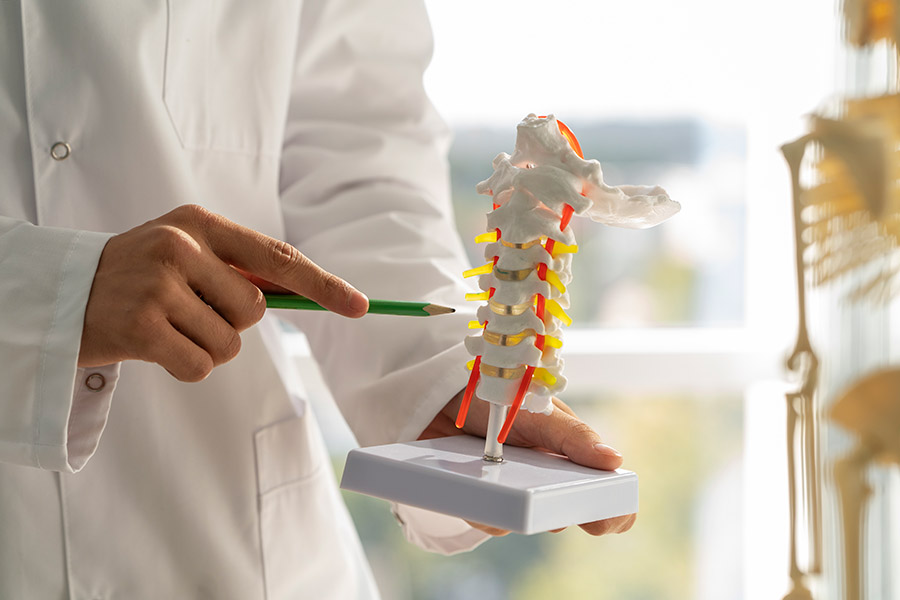
Neurosurgery Of The Spine In Nagpur | Advanced Spine And Nerve Care with Dr.Ritesh Nawkhare
Neurosurgery Of The Spine In Nagpur focuses on diagnosing and treating conditions that affect the spinal cord, nerves, vertebrae, discs, and other structures supporting the spine. Spinal problems can develop due to disc damage, injuries, narrowing of the spinal canal, tumours, deformities, instability, or age-related changes. Symptoms can range from local back or neck pain to numbness, tingling, weakness, balance problems, or difficulty walking. Some conditions remain manageable with non-surgical treatment, while others may require a neurosurgical approach when there is significant nerve or spinal cord compression. At Neurosys Multispeciality Centre In Nagpur, Dr. Ritesh Nawkhare provides specialist assessment for complex spine and neurological conditions. Treatment is planned after considering symptoms, neurological findings, imaging results, and the overall condition of the spine.
Understanding Spinal Neurosurgery
Spinal neurosurgery involves the surgical management of conditions affecting the spinal cord, nerve roots, and supporting spinal structures. The objective is not simply to operate on the spine but to identify the source of neurological or structural problems and select an appropriate treatment.
Depending on the diagnosis, treatment may focus on:
▪ Relieving pressure on nerves or the spinal cord
▪ Removing damaged or abnormal tissue
▪ Stabilising an unstable spinal segment
▪ Correcting selected spinal deformities
▪ Treating spinal tumours
▪ Addressing traumatic spinal injuries
▪ Preserving or improving neurological function
Not every spinal condition requires surgery. A detailed assessment helps determine whether surgical or non-surgical care is more appropriate.
Conditions Treated Through Spinal Neurosurgery
▪ Herniated Disc – A displaced disc can irritate or compress a nerve, causing back or neck pain, numbness, or pain in the arm or leg.
▪ Spinal Stenosis – Narrowing around the spinal cord or nerves may cause pain, weakness, numbness, or walking difficulty.
▪ Spinal Cord Compression – Pressure on the spinal cord can affect strength, sensation, coordination, and balance.
▪ Spinal Tumours – Tumours affecting the spine, spinal cord, or nerves may require detailed evaluation and specialised treatment.
▪ Spinal Trauma – Fractures or dislocations can make the spine unstable and may require decompression or stabilisation.
▪ Spinal Deformities – Conditions such as scoliosis and kyphosis can affect spinal alignment, stability, and movement.
Symptoms That Should Not Be Ignored
Spinal conditions can present differently depending on the affected region and structures involved.
Possible symptoms include:
▪ Persistent neck or back pain
▪ Pain spreading into an arm or leg
▪ Numbness or tingling
▪ Muscle weakness
▪ Reduced grip or limb strength
▪ Difficulty walking
▪ Balance problems
▪ Changes in coordination
▪ Loss of bladder or bowel control in serious cases
Progressive weakness, significant walking difficulty, or new bladder and bowel problems require urgent medical evaluation.
How Is A Spinal Problem Diagnosed?
Diagnosis begins with a detailed discussion about symptoms, their duration, progression, and effect on daily activities. A neurological examination helps assess muscle strength, sensation, reflexes, coordination, and movement.
Imaging may include:
▪ X-rays – Help assess spinal alignment, vertebral changes, and certain structural problems.
▪ MRI – Provides detailed views of discs, nerves, spinal cord, and soft tissues.
▪ CT Scan – Offers detailed information about bones and complex spinal structures.
▪ Nerve Tests – May be recommended in selected cases to assess nerve function.
The findings are considered together rather than relying on an imaging report alone.
Finding The Source Of Your Symptoms
Back or neck pain does not always originate from the same structure. A disc problem, joint changes, nerve compression, spinal instability, or another condition can produce similar symptoms.
A detailed assessment helps identify:
▪ Where the symptoms begin
▪ Whether a nerve is involved
▪ Whether the spinal cord is affected
▪ Which spinal level may be responsible
▪ Whether the condition is stable or progressing
▪ Whether surgery is actually required
This approach supports more focused treatment planning.
Non-Surgical Treatment Options
Surgery is not automatically the first treatment for every spinal disorder. When appropriate, conservative care may help control symptoms and improve function.
Depending on the condition, treatment may include:
▪ Medication for pain and inflammation
▪ Physiotherapy
▪ Activity modification
▪ Posture and movement guidance
▪ Rehabilitation
▪ Neurological monitoring
▪ Follow-up imaging
The treatment approach is adjusted according to the patient’s response and the progression of the condition.
When May Spine Surgery Be Considered?
Surgery may be considered when symptoms remain significant despite appropriate conservative treatment or when there is a structural or neurological problem that requires correction. Factors that may support surgical consideration include:
▪ Persistent severe symptoms
▪ Progressive muscle weakness
▪ Significant nerve compression
▪ Spinal cord compression
▪ Severe spinal instability
▪ Progressive deformity
▪ Certain spinal tumours
▪ Unstable spinal trauma
The decision depends on the diagnosis, neurological findings, imaging, overall health, and expected benefits of treatment.
Surgical Approaches Used In Spine Neurosurgery
The surgical approach is selected according to the condition, spinal level, and structures involved.
▪ Decompression Surgery – Relieves pressure on a nerve or spinal cord by creating more space around the affected area.
▪ Discectomy – Removes the damaged part of a disc when it is compressing a nearby nerve.
▪ Spinal Stabilisation – Uses implants such as screws and rods to support an unstable spinal segment.
▪ Spinal Fusion – Joins selected spinal segments to improve stability and maintain proper alignment.
▪ Tumour Surgery – Depending on the tumour, treatment may involve removal, biopsy, decompression, or spinal stabilization.
Planning Surgery Around Your Individual Needs
Spinal surgery requires detailed planning because the anatomy of the spine varies from person to person. The surgical approach is selected according to the location and severity of the problem.
Planning may consider:
▪ Spinal level involved
▪ Nerve or spinal cord compression
▪ Spinal alignment
▪ Bone quality
▪ Stability of the affected segment
▪ Previous spinal procedures
▪ Overall health
▪ Functional goals
The aim is to address the underlying problem while preserving neurological function and maintaining appropriate spinal stability.
Benefits Of Spine Neurosurgery
▪ Nerve Pressure Relief – Helps reduce compression on affected nerves or the spinal cord.
▪ Pain Improvement – May reduce pain caused by nerve compression or structural spinal problems.
▪ Better Mobility – Can support improved movement and walking when spinal compression limits function.
▪ Spinal Stability – Helps restore or maintain stability in selected spinal conditions.
▪ Neurological Protection – Timely treatment may help protect nerve and spinal cord function.
▪ Improved Daily Function – Effective treatment can support a gradual return to routine activities and improve quality of life.
Recovery After Spine Neurosurgery
Recovery depends on the type of procedure, spinal condition, and overall health. Care is planned according to individual progress.
▪ Early Mobilization – Gentle movement may begin when medically appropriate.
▪ Pain Management – Medicines and wound care help support comfortable recovery.
▪ Physiotherapy – Targeted exercises can improve strength, flexibility, balance, and mobility.
▪ Activity Progression – Daily activities are gradually increased as healing improves.
▪ Follow-Up Care – Regular reviews help monitor recovery, neurological function, and spinal healing.
▪ Return To Routine – Work, driving, exercise, and other activities are resumed gradually based on medical advice.
Why Choose Specialist Spine Neurosurgical Care?
▪ Experienced Neurosurgical Evaluation – Detailed assessment of spinal and neurological symptoms.
▪ Personalised Treatment Planning – Care is planned according to the diagnosis, imaging, and individual needs.
▪ Focus On Nerve Protection – Treatment aims to relieve compression while supporting neurological function.
▪ Comprehensive Spine Care – Evaluation covers discs, nerves, spinal cord, stability, trauma, tumours, and deformities.
▪ Recovery-Focused Approach – Guidance continues through rehabilitation, follow-up, and gradual return to daily activities.
Frequently Asked Questions
Book a Consultation for Neurosurgery of the spine in Nagpur
Persistent spinal symptoms deserve a careful evaluation, particularly when pain is accompanied by weakness, numbness, balance problems, or difficulty walking. At Neurosys Multispeciality Centre In Nagpur, Dr. Ritesh Nawkhare assesses the neurological and structural aspects of spine conditions before recommending treatment. The approach may include conservative care, rehabilitation, further investigation, or surgery when necessary.
▪ Detailed neurological and spinal assessment
▪ Review of relevant imaging
▪ Individualised treatment planning
▪ Evaluation of surgical and non-surgical options
▪ Guidance on recovery and rehabilitation
Book a consultation to understand the cause of your symptoms and discuss an appropriate treatment plan for your spinal condition.