
Disc Herniation Treatment With Careful Spine And Neurological Evaluation By Dr.Ritesh Nawkhare
Disc Herniation In Nagpur can affect the spine when the softer inner portion of a spinal disc moves through a weakened area of its outer layer. If the displaced disc material comes into contact with a nearby nerve, it may cause pain, tingling, numbness, or weakness along the affected nerve pathway. Symptoms can occur in the lower back and travel into the buttock or leg, or develop in the neck and extend toward the shoulder, arm, or hand. The severity of symptoms can vary considerably. Some people experience occasional discomfort, while others may develop persistent pain, altered sensation, reduced strength, or difficulty with everyday movements. Symptoms may become more noticeable while bending, lifting, sitting for long periods, coughing, or performing certain activities. However, the presence of a disc abnormality on an imaging scan does not always mean that it is responsible for the symptoms. At Neurosys Multispeciality Centre In Nagpur, disc-related problems are evaluated through a detailed clinical and neurological assessment.
What Is Disc Herniation?
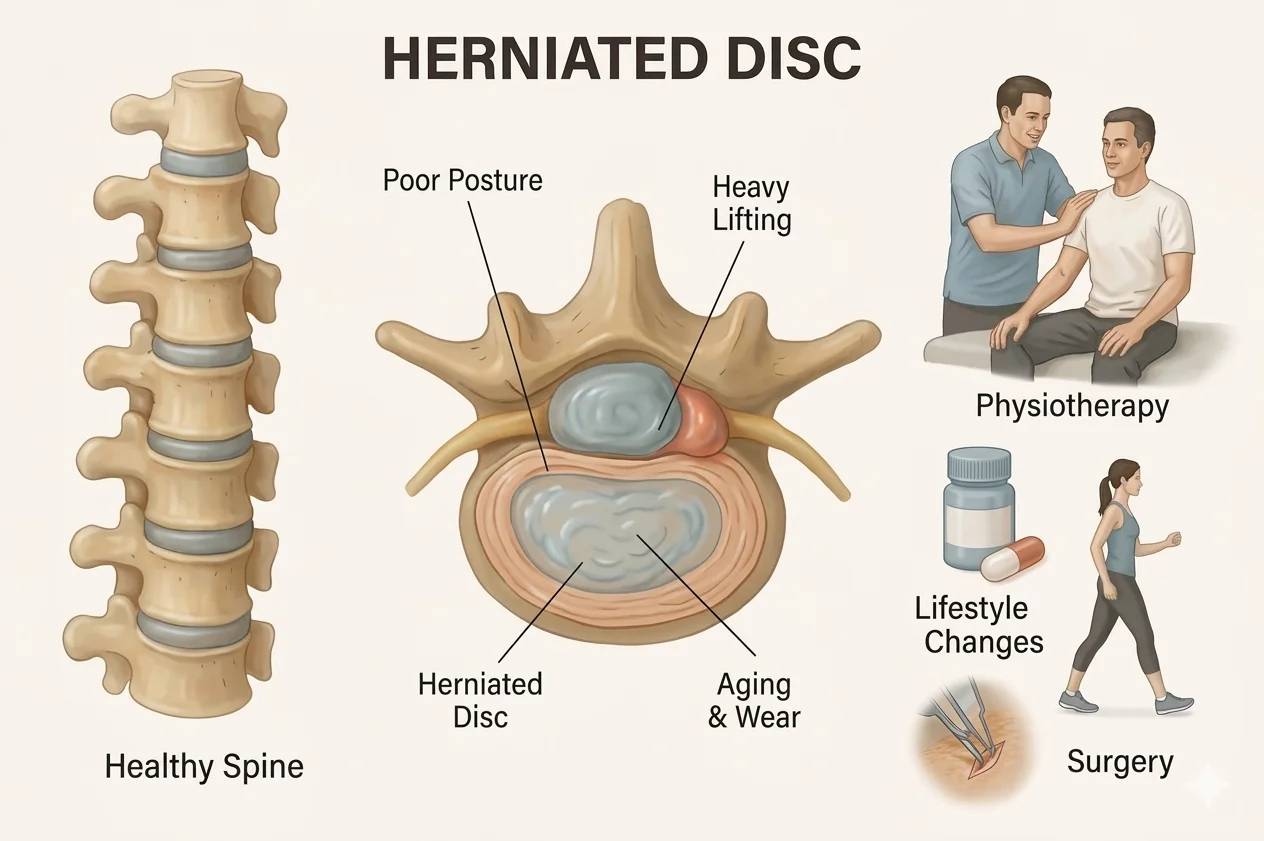
A spinal disc acts as a cushion between two vertebrae. It has a softer inner portion surrounded by a stronger outer layer. Disc herniation occurs when the inner material pushes through a weakened or damaged area of the outer layer. The herniated portion may come into contact with a nearby nerve. This can lead to pain or neurological symptoms in the area supplied by that nerve. However, not every disc herniation causes symptoms. Some people may have a disc abnormality on an imaging scan without experiencing significant discomfort.
The condition may develop gradually as discs become less flexible with age. It can also occur after lifting, bending, twisting, or certain injuries.
Common Symptoms Of Disc Herniation
Symptoms depend on the location of the affected disc and whether a nerve is irritated or compressed.
Common symptoms may include:
▪ Lower back or neck pain
▪ Pain that travels into the buttock, thigh, calf, foot, shoulder, arm, or hand
▪ Tingling or a pins-and-needles sensation
▪ Numbness in part of an arm or leg
▪ Muscle weakness
▪ Difficulty walking or performing certain movements
▪ Pain that becomes worse with coughing, sneezing, or particular movements
A lumbar disc herniation may cause symptoms similar to sciatica when it affects a nerve root in the lower back. Cervical disc herniation can produce pain or altered sensation extending into the shoulder, arm, or hand.
What Causes Disc Herniation?
Disc herniation can have more than one contributing factor. In many people, gradual changes in the spinal discs make them more vulnerable over time.
Possible contributing factors include:
▪ Age-related disc changes
▪ Repeated bending or twisting
▪ Improper lifting techniques
▪ Physically demanding work
▪ Prolonged sitting or driving
▪ Excess body weight
▪ Lack of regular physical activity
▪ Sudden injury or trauma
Smoking may also affect disc health and contribute to degenerative changes.
Lumbar Disc Herniation
The lower back is one of the most common areas affected by disc herniation. When a lumbar disc irritates a nearby nerve, pain may travel from the lower back into the buttock and leg.
You may experience:
▪ Lower back pain
▪ Buttock pain
▪ Leg pain
▪ Tingling or numbness in the leg or foot
▪ Weakness in specific leg or foot muscles
▪ Difficulty walking comfortably
The symptoms can affect one side of the body more than the other. A detailed neurological examination helps the doctor understand whether the symptoms may be related to nerve compression.
Cervical Disc Herniation
A disc herniation in the neck can affect nerves that travel toward the shoulder, arm, and hand. Patients may notice neck pain along with radiating symptoms.
Possible symptoms include:
▪ Neck pain
▪ Shoulder pain
▪ Arm pain
▪ Tingling in the hand or fingers
▪ Numbness
▪ Reduced grip strength
▪ Weakness in the arm or hand
The pattern of symptoms can provide useful information about which nerve may be involved.
Understanding Your Spine Assessment
Diagnosis starts with a review of your symptoms and a neurological examination. The doctor may check muscle strength, reflexes, sensation, movement, and walking ability.
Further tests may be recommended when needed:
▪ MRI Scan – Shows the discs, nerves, and spinal structures in detail.
▪ X-Ray – Helps assess bones, alignment, and other spinal changes.
▪ CT Scan – Provides detailed images of the spine when required.
▪ Nerve Tests – Help identify nerve irritation or compression in selected cases.
Symptoms Of Disc Herniation
Symptoms vary depending on the disc location and the nerve involved. Some people have mild local pain, while others develop radiating or neurological symptoms.
Common signs include:
▪ Neck or lower back pain
▪ Pain spreading into the arm or leg
▪ Tingling or numbness
▪ Burning or shooting pain
▪ Muscle weakness
▪ Reduced grip strength
▪ Difficulty standing or walking
▪ Pain that worsens with certain movements
Persistent or worsening weakness, numbness, or difficulty walking should be evaluated promptly, as these may indicate significant nerve involvement.
Individualised Treatment For Spine And Nerve Conditions
At Neurosys Multispeciality Centre In Nagpur, disc-related spinal problems are evaluated with a neurological and functional perspective. Dr. Ritesh Nawkhare, Neurosurgeon, assesses patients with symptoms that may be related to disc herniation, nerve compression, and other spinal conditions.
The evaluation combines clinical examination with appropriate imaging review. This helps determine whether the disc abnormality is responsible for the symptoms and whether conservative care, further investigation, or surgical treatment should be considered. Each patient can have a different pattern of symptoms and neurological involvement. Therefore, treatment is planned according to the individual’s condition rather than following a fixed approach. The aim is to provide clear guidance, protect neurological function, reduce unnecessary intervention, and support a safe return to daily activities.
Red Flag Symptoms That Need Urgent Attention
Certain symptoms associated with spinal nerve compression should not be ignored.
Seek urgent medical evaluation if you develop:
▪ Sudden or worsening weakness
▪ Major difficulty walking
▪ Loss of bladder or bowel control
▪ Difficulty passing urine
▪ Severe numbness around the inner thighs, buttocks, or genital region
▪ Rapidly worsening neurological symptoms
These symptoms may indicate significant nerve compression and require prompt assessment.
Returning To Daily Activities With Greater Comfort
Disc-related symptoms can affect more than physical comfort. Persistent pain or nerve symptoms may interfere with work, sleep, exercise, travel, and routine household activities.
Simple movements such as bending, lifting, sitting for long periods, or climbing stairs may become difficult.
Appropriate treatment aims to restore function rather than focusing only on temporary pain relief. Your care plan may therefore include guidance on movement, rehabilitation, gradual activity progression, and prevention of avoidable strain.
Surgical Treatment For Disc Herniation
When surgery is appropriate, the primary objective is to relieve pressure on the affected nerve while addressing the underlying spinal problem.
The procedure selected depends on:
▪ Location of the herniated disc
▪ Spinal level involved
▪ Degree of nerve compression
▪ Neurological findings
▪ Previous spinal procedures
▪ Overall health and individual requirements
A specialist consultation helps determine whether surgery is appropriate and which approach may provide the most suitable solution.
Why Choose Specialist Disc Herniation Evaluation?
Disc-related symptoms can overlap with several other spinal and neurological conditions. A specialist assessment can help identify the actual source of the problem and determine the appropriate level of care.
Patients benefit from:
▪ Detailed neurological assessment
▪ Spine-focused clinical evaluation
▪ Correlation of symptoms with imaging
▪ Assessment of nerve function
▪ Individualised treatment planning
▪ Evaluation of surgical and non-surgical options
▪ Follow-up based on neurological response and recovery
Frequently Asked Questions
Book a Consultation
At Neurosys Multispeciality Centre In Nagpur, Dr. Ritesh Nawkhare provides detailed neurological and spine-focused evaluation for patients with suspected disc herniation. The assessment considers your symptoms, medical history, neurological findings, and available imaging reports rather than relying on a scan alone. Treatment is planned according to your individual condition. Depending on the severity of symptoms, you may benefit from conservative care, further investigations, rehabilitation, or surgical evaluation when necessary. The aim is to relieve symptoms, protect nerve function, improve mobility, and help you return to your regular activities with greater confidence.
If you are experiencing persistent back or neck pain, radiating pain, numbness, tingling, or weakness, consider a specialist evaluation. For Disc Herniation In Nagpur, consult Dr. Ritesh Nawkhare at Neurosys Multispeciality Centre In Nagpur for personalized guidance and appropriate spine and neurological care.