
TLIF Surgery In Rewa For Lumbar Spine And Nerve Problems
TLIF Surgery In Rewa may be considered for selected lumbar spine conditions that cause ongoing back pain, leg symptoms, nerve compression, or instability of the spinal segment. TLIF means Transforaminal Lumbar Interbody Fusion. It is a surgical procedure designed to address a specific spinal problem while providing stability to the affected level. Dr. Ritesh Nawkhare evaluates the condition before discussing whether TLIF is appropriate. The assessment may include the nature and duration of pain, neurological symptoms, previous treatment, physical examination, and relevant MRI or CT findings. These factors are considered together because an abnormal scan does not always explain the symptoms or indicate the need for fusion. Treatment is planned according to the individual diagnosis. Some patients may improve with medicines, physiotherapy, rehabilitation, activity modification, or monitoring. Surgery is discussed when the clinical findings and structural changes indicate that an operative approach may be appropriate.
What Is TLIF Surgery?
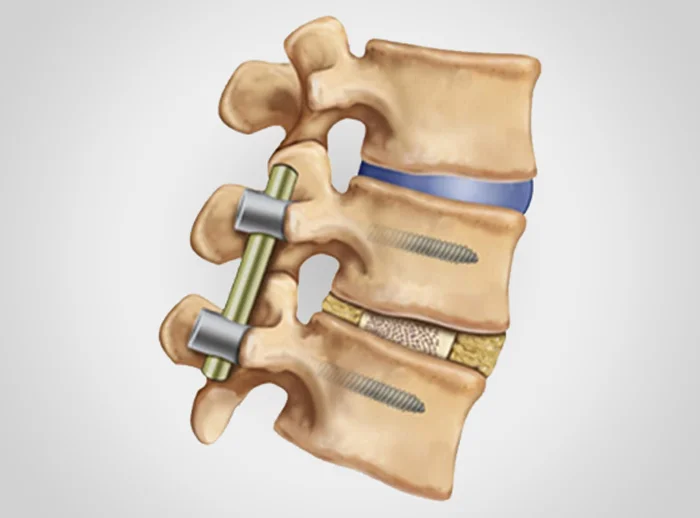
TLIF is a type of lumbar spinal fusion procedure. It involves removing the affected disc through a posterior approach and placing an interbody implant in the disc space. Screws and rods may be used to stabilise the vertebrae while fusion develops between the treated spinal segments.
The procedure may also involve decompression when a spinal nerve is being compressed. This can be relevant when a patient has symptoms such as radiating leg pain, numbness, tingling, or weakness. The exact surgical technique depends on the spinal level, underlying condition, and findings during evaluation.
Why May TLIF Be Recommended?
TLIF is generally considered for selected structural problems rather than ordinary back pain alone. The procedure may be discussed when the affected spinal segment has instability or when decompression and stabilisation are both required.
Conditions that may lead to TLIF assessment include:
▪ Lumbar spondylolisthesis
▪ Selected cases of spinal stenosis
▪ Lumbar spinal instability
▪ Certain degenerative disc conditions
▪ Recurrent disc problems in selected cases
▪ Persistent nerve compression with structural instability
▪ Selected deformity-related lumbar conditions
▪ Other lumbar problems requiring spinal fusion
The presence of one of these conditions does not automatically mean that TLIF is necessary. The decision depends on symptoms, neurological findings, imaging, previous treatment, and the overall stability of the spine.
Symptoms That May Need Lumbar Spine Assessment
Lumbar spine disorders can produce symptoms in the lower back as well as the legs. Nerve irritation or compression may cause pain that travels from the back into the buttock, thigh, calf, or foot. Some patients may also notice altered sensation or weakness.
Symptoms that may require specialist evaluation include:
▪ Persistent lower back pain
▪ Pain extending into the buttock or leg
▪ Sciatica
▪ Numbness or tingling
▪ Leg or foot weakness
▪ Difficulty standing for long periods
▪ Difficulty walking because of pain or weakness
▪ Repeated symptoms despite treatment
The pattern of symptoms is important. Dr. Ritesh Nawkhare considers where the pain occurs, whether it travels into the leg, how long it has been present, and whether neurological changes are also present.
Detailed Evaluation Before TLIF
A careful assessment is important before considering spinal fusion. The consultation may begin with a discussion about your current symptoms and how they affect work, movement, sleep, and daily activities. Previous injuries, surgeries, medicines, physiotherapy, and other treatments may also be reviewed.
The evaluation may include:
▪ Detailed medical history
▪ Assessment of pain and neurological symptoms
▪ Muscle strength testing
▪ Sensory examination
▪ Reflex assessment when required
▪ Evaluation of walking and movement
▪ Review of previous treatment
▪ MRI or CT assessment
▪ Evaluation of spinal alignment and stability
▪ Consideration of non-surgical options
This helps establish whether the symptoms are coming from the suspected spinal level and whether fusion is clinically justified.
Understanding MRI And CT Findings
MRI can help show the condition of discs, nerves, spinal canal, and other soft tissues. It may identify disc herniation, degeneration, narrowing of the spinal canal, or nerve compression.
CT provides detailed information about the bony structures of the spine. It can be useful when additional information about vertebrae, bone changes, fractures, or previous surgical areas is required.
Imaging is only one part of the assessment. A scan may show changes that are not responsible for a patient’s symptoms. Therefore, Dr. Ritesh Nawkhare correlates the radiological findings with the clinical examination and symptom pattern before discussing surgery.
Non-Surgical Treatment May Be Considered First
Surgery is not always the first treatment for lumbar spine problems. When there is no immediate indication for an operation, conservative care may be appropriate. The treatment plan depends on the underlying diagnosis, severity of symptoms, neurological status, and previous response to treatment.
Non-surgical management may include:
▪ Medicines when clinically appropriate
▪ Physiotherapy
▪ Rehabilitation
▪ Activity modification
▪ Exercise guidance
▪ Posture and movement advice
▪ Regular monitoring
▪ Follow-up evaluation
The response to these measures can provide useful information about the progression of the condition. If symptoms remain controlled and neurological function is stable, continued conservative care may be appropriate.
When Can TLIF Surgery Be Considered?
TLIF may be discussed when a patient has a structural lumbar problem associated with persistent symptoms and the affected segment requires stabilisation. It may also be considered when nerve decompression alone is not sufficient because instability or another structural issue needs to be addressed.
Factors that may influence the decision include:
▪ Persistent symptoms despite suitable non-surgical care
▪ Significant nerve compression
▪ Spinal instability
▪ Spondylolisthesis
▪ Recurrent symptoms associated with structural changes
▪ Appropriate correlation between symptoms and imaging
▪ Neurological findings when present
The expected benefits, possible risks, alternatives, and recovery requirements should be discussed before proceeding with surgery.
TLIF And Nerve Decompression
Some lumbar conditions cause symptoms because a spinal nerve is compressed. This may result in shooting leg pain, numbness, tingling, or weakness. When nerve compression is part of the underlying problem, decompression may be incorporated into the surgical plan.
TLIF can combine decompression with stabilization in selected cases. The need for decompression and the exact surgical approach depend on the location and severity of the compression and the overall condition of the lumbar spine.
What Happens During TLIF?
The surgical approach is planned according to the affected spinal level and the patient’s anatomy. The damaged disc is accessed and removed from the selected disc space. An interbody implant is placed to maintain the disc-space height, while fixation may be used to stabilise the vertebral segment.
Bone graft material is generally used to support the fusion process. Over time, the goal is for the treated vertebrae to fuse into a stable segment. The specific steps can vary depending on the patient’s condition and the surgical plan.
Recovery After TLIF Surgery
Recovery after TLIF is gradual and differs from one patient to another. The early phase may focus on safe movement, pain management, wound care, and gradual mobilisation. Activity is usually increased according to the surgeon’s instructions and the individual’s progress.
During recovery, certain movements and physical activities may need to be limited temporarily. Heavy lifting, excessive bending, and strenuous activities may be restricted while the spine heals. Follow-up appointments help assess pain, movement, neurological symptoms, and overall progress.
Rehabilitation may also form part of recovery when clinically appropriate. The programmed can be adjusted according to strength, mobility, symptoms, and functional goals.
Follow-Up And Long-Term Care
Follow-up remains important after lumbar fusion surgery. The doctor may assess your pain, walking ability, muscle strength, sensation, and general recovery. Imaging may be recommended when clinically required to monitor the treated spinal level.
Following the recommended activity restrictions can support the healing process. Gradual return to normal activities is generally based on recovery rather than a fixed timeline for every patient.
Why Consult Dr. Ritesh Nawkhare?
Dr. Ritesh Nawkhare takes a structured approach to lumbar spine problems. He considers the patient’s symptoms and neurological findings alongside relevant imaging before discussing a surgical procedure.
The consultation may focus on:
▪ Identifying the likely source of symptoms
▪ Reviewing previous treatment
▪ Assessing neurological function
▪ Studying MRI and CT findings
▪ Checking for nerve compression
▪ Considering spinal stability
▪ Discussing non-surgical treatment
▪ Evaluating whether fusion is appropriate
▪ Explaining available treatment options
The aim is to match treatment with the actual spinal problem rather than recommending surgery based on imaging alone.
Frequently Asked Questions -
Book A Consultation With
Persistent lower back pain, sciatica, numbness, weakness, or suspected spinal instability deserves proper evaluation. A specialist consultation can help determine whether the symptoms are related to a lumbar spine problem and whether further investigation or treatment is required.
If TLIF is being considered, the decision should be based on your symptoms, neurological examination, imaging findings, previous treatment, and the condition of the affected spinal segment. Depending on the findings, treatment may involve conservative care, further evaluation, decompression, fusion, or another suitable approach.