
TLIF Surgery In Katni For Personalized Lumbar Spine Care By Dr.Ritesh Nawkhare
Persistent lower back pain can affect much more than physical comfort. It may make sitting at work difficult, disturb sleep, reduce walking time, or make routine household activities harder. When pain travels into the buttock or leg, you may also notice tingling, numbness, or weakness. If you are searching for TLIF Surgery In Katni, Dr. Ritesh Nawkhare first looks for the reason behind your symptoms. He listens to how your problem started, how it has changed, and what treatment you have already tried. He then combines your medical history, neurological examination, and relevant imaging findings before discussing treatment. An MRI may show a disc problem, narrowing, or vertebral slippage, but the scan alone does not decide whether you need fusion. Dr. Ritesh Nawkhare compares the reported changes with your symptoms and examination. This helps determine whether TLIF may be appropriate or whether another form of treatment may better suit your condition.
Start With The Cause, Not Just The Pain - TLIF Surgery In Katn
Lower back pain can come from different structures. A disc, nerve, joint, or unstable spinal segment may contribute to the problem. Two people with similar pain may therefore need completely different treatment.
During the consultation, Dr. Ritesh Nawkhare considers the location of your pain, its duration, movements that make it worse, and whether it travels into the leg. He also looks for numbness, weakness, walking difficulties, or other neurological changes.
This detailed assessment helps identify the problem before a treatment decision is made.
Understanding When Fusion May Be Needed
TLIF is not a routine solution for every person with back pain. It may be considered when a lumbar spinal segment has a structural problem that requires both treatment of the affected area and additional stabilisation.
Selected situations may include:
▪ Lumbar spondylolisthesis
▪ Spinal instability
▪ Certain forms of degenerative disc disease
▪ Lumbar stenosis associated with instability
▪ Selected recurrent disc problems
▪ Certain spinal deformities
▪ Conditions requiring nerve decompression with stabilisation
▪ Other carefully selected lumbar spine conditions
Your diagnosis alone does not determine whether TLIF is suitable. Dr. Ritesh Nawkhare considers your symptoms, examination, imaging, previous treatment, and overall health together.
When Back Pain Starts Affecting The Leg ?
Pain that moves from the lower back into the buttock, thigh, calf, or foot may indicate nerve irritation or compression. You may describe this pain as burning, shooting, sharp, or electric-like.
Some patients also experience:
▪ Numbness in the leg or foot
▪ Tingling sensations
▪ Weakness
▪ Difficulty walking for longer periods
▪ Increased discomfort while standing
▪ Reduced ability to perform normal activities
Dr. Ritesh Nawkhare examines the distribution of your symptoms and checks relevant neurological functions. This helps determine whether a particular nerve may be involved.
A Closer Look Before Recommending TLIF Surgery In Katni
Before discussing TLIF, Dr. Ritesh Nawkhare reviews your complete spinal history. He wants to understand not only what your scan shows, but also how the problem affects you.
The evaluation may include:
▪ Detailed discussion of your back and leg pain
▪ Previous medicines and their effectiveness
▪ Physiotherapy and rehabilitation history
▪ Previous injections or spinal procedures
▪ Previous injuries or operations
▪ Muscle strength and sensation
▪ Reflexes and walking pattern
▪ MRI, CT, X-ray, or other relevant reports
This information helps create a treatment plan based on your actual clinical situation.
Your MRI Is Important, But It Is Only One Part Of The Assessment
Imaging gives valuable information about the structure of the lumbar spine. However, an MRI report cannot explain every symptom by itself.
Disc degeneration, narrowing, or vertebral slippage can sometimes appear in people who have little or no pain. At the same time, a patient may experience significant symptoms that require further clinical investigation.
Dr. Ritesh Nawkhare compares the imaging findings with your complaints and examination. He looks for a clear clinical connection before considering an operation.
Explore Non-Surgical Options First When Appropriate
Not every patient with a lumbar spine problem needs surgery. Depending on the diagnosis, symptoms may improve with conservative care.
Treatment may include:
▪ Appropriate medicines
▪ Physiotherapy
▪ Rehabilitation exercises
▪ Activity modification
▪ Movement and posture guidance
▪ Monitoring over time
▪ Management of related medical conditions
▪ Further investigations when necessary
Your response to these measures helps your doctor understand how the condition is progressing. If symptoms continue or neurological problems develop, the treatment plan can be reviewed again.
What Happens During TLIF Surgery in Katni ?
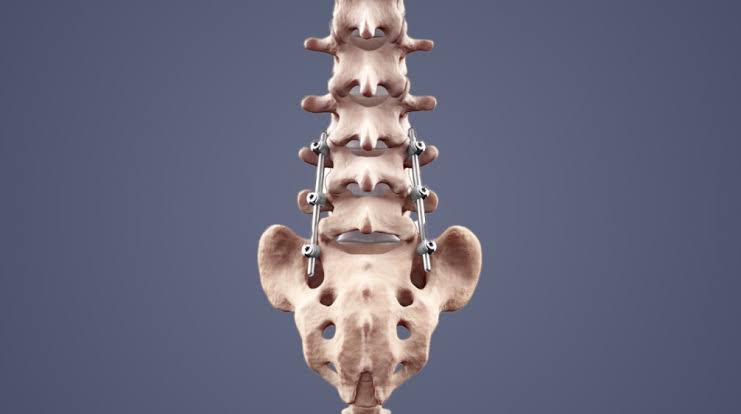
TLIF is performed through the back of the lumbar spine. The surgeon reaches the affected spinal level and removes the damaged disc. An interbody cage or spacer is placed within the disc space along with bone graft material.
Screws and rods provide additional stability while the treated vertebrae gradually fuse. If nerve compression is present, the procedure may also include decompression of the affected nerve.
The surgical approach depends on the spinal level, anatomy, diagnosis, and specific goals of treatment.
What Is The Surgeon Trying To Achieve?
The purpose of TLIF depends on why surgery is being considered. In selected patients, the procedure may help address several problems at the same spinal level.
Treatment goals may include:
▪ Relieving pressure on an affected nerve
▪ Stabilising an unstable spinal segment
▪ Addressing selected sources of radiating leg pain
▪ Removing a severely damaged disc
▪ Supporting appropriate spinal alignment
▪ Creating conditions for bone fusion
▪ Improving function after recovery
The expected result varies according to the underlying condition and the patient’s overall health.
Why A Scan Cannot Decide On TLIF Surgery In Katni
It is common for patients to become concerned after reading an MRI report. Terms such as “disc degeneration,” “stenosis,” or “spondylolisthesis” can sound alarming.
However, the same imaging finding can affect different people in different ways. One patient may have minimal symptoms, while another may have significant pain or nerve-related problems.
Dr. Ritesh Nawkhare therefore considers the complete clinical picture. If the imaging finding does not match your symptoms, fusion may not be the appropriate answer. If your symptoms, examination, and structural findings point toward instability or nerve compression requiring stabilization, TLIF may be discussed.
Important Things To Know Before Lumbar Fusion
TLIF is a major spinal procedure and carries potential risks. These may include infection, bleeding, nerve-related complications, problems with bone fusion, persistent symptoms, or the need for additional treatment.
Your individual risk depends on factors such as your diagnosis, general health, spinal anatomy, previous procedures, and the number of levels treated.
During consultation, Dr. Ritesh Nawkhare can explain the potential benefits, limitations, risks, alternatives, and expected recovery relevant to your situation.
What Patients May Gain From Appropriate TLIF Surgery In Katni ?
When the procedure matches the underlying problem, TLIF may help address both mechanical instability and nerve-related symptoms.
Possible treatment goals include:
▪ Stabilization of an affected lumbar segment
▪ Decompression of a compressed nerve
▪ Management of selected radiating leg pain
▪ Removal of a damaged disc
▪ Support for spinal alignment
▪ Development of spinal fusion
▪ Improvement in daily function after recovery
The outcome cannot be predicted from the procedure alone. Your diagnosis, neurological condition, general health, and recovery all play a role.
Why Choose Dr. Ritesh Nawkhare For TLIF Evaluation?
Good spine care starts with identifying the actual source of the problem. Dr. Ritesh Nawkhare takes time to understand your symptoms before discussing whether surgery is appropriate.
▪ Listens to your concerns and treatment history
▪ Reviews how your symptoms have changed
▪ Checks for nerve-related changes
▪ Performs an appropriate neurological examination
▪ Reviews relevant spinal imaging
▪ Connects scan findings with your symptoms
▪ Considers non-surgical care when suitable
▪ Discusses TLIF when clinical findings support it
▪ Explains the purpose and expected goals of surgery
▪ Discusses recovery and follow-up requirements.
Frequently Asked Questions - Tlif Surgery in Katni
An MRI provides important information, but it is not considered alone. Your symptoms, medical history, neurological examination, and imaging findings are assessed together.
Book A Consultation With Tlif Surgery in Katni
Persistent lower back pain can gradually interfere with your work, sleep, movement, and everyday activities. Pain may remain around the lower back or travel into the buttock and leg. Numbness, tingling, weakness, or difficulty walking may also occur when a spinal nerve is compressed. If these problems continue, return frequently, or do not improve with appropriate treatment, a detailed spine evaluation can help identify the underlying cause.
If you are looking for TLIF Surgery In Katni, Dr. Ritesh Nawkhare begins the consultation by understanding how your symptoms developed and how they affect your daily life. He reviews your medical history, previous treatments, physical limitations, and neurological examination findings. When clinically required, he also evaluates relevant MRI, CT, X-ray, or other investigation reports. Rather than relying on an imaging report alone, he compares the findings with your symptoms and examination. This helps determine whether nerve compression, spinal instability, vertebral slippage, or another structural problem may be contributing to your condition and whether TLIF or another treatment approach may be appropriate.