
TLIF surgery In Bandhavgarh | Advanced Lumbar Spine Care For Nerve Compression & Spinal Instability with Dr.Ritesh Nawkhare
Persistent lower back pain can affect walking, sitting, working, sleeping, and daily activities. Pain may remain in the lower back or travel into the buttock and leg, sometimes with numbness, tingling, or weakness. If symptoms continue despite medicines or physiotherapy, a detailed spine evaluation can help identify the cause. Patients looking for TLIF Surgery In Bandhavgarh can consult Dr. Ritesh Nawkhare for assessment of lumbar spine and nerve-related problems. Dr. Ritesh Nawkhare reviews your symptoms, medical history, neurological examination, previous treatment, and relevant MRI or CT scans. TLIF Surgery In Bandhavgarh may be considered only when specific lumbar spine problems require surgical stabilization. Depending on your condition, non-surgical treatment, further evaluation, or TLIF may be discussed. Patients considering TLIF Surgery In Bandhavgarh receive an individualized treatment plan based on their symptoms, spinal condition, and clinical findings.
Understanding TLIF Surgery in Bandhavgarh
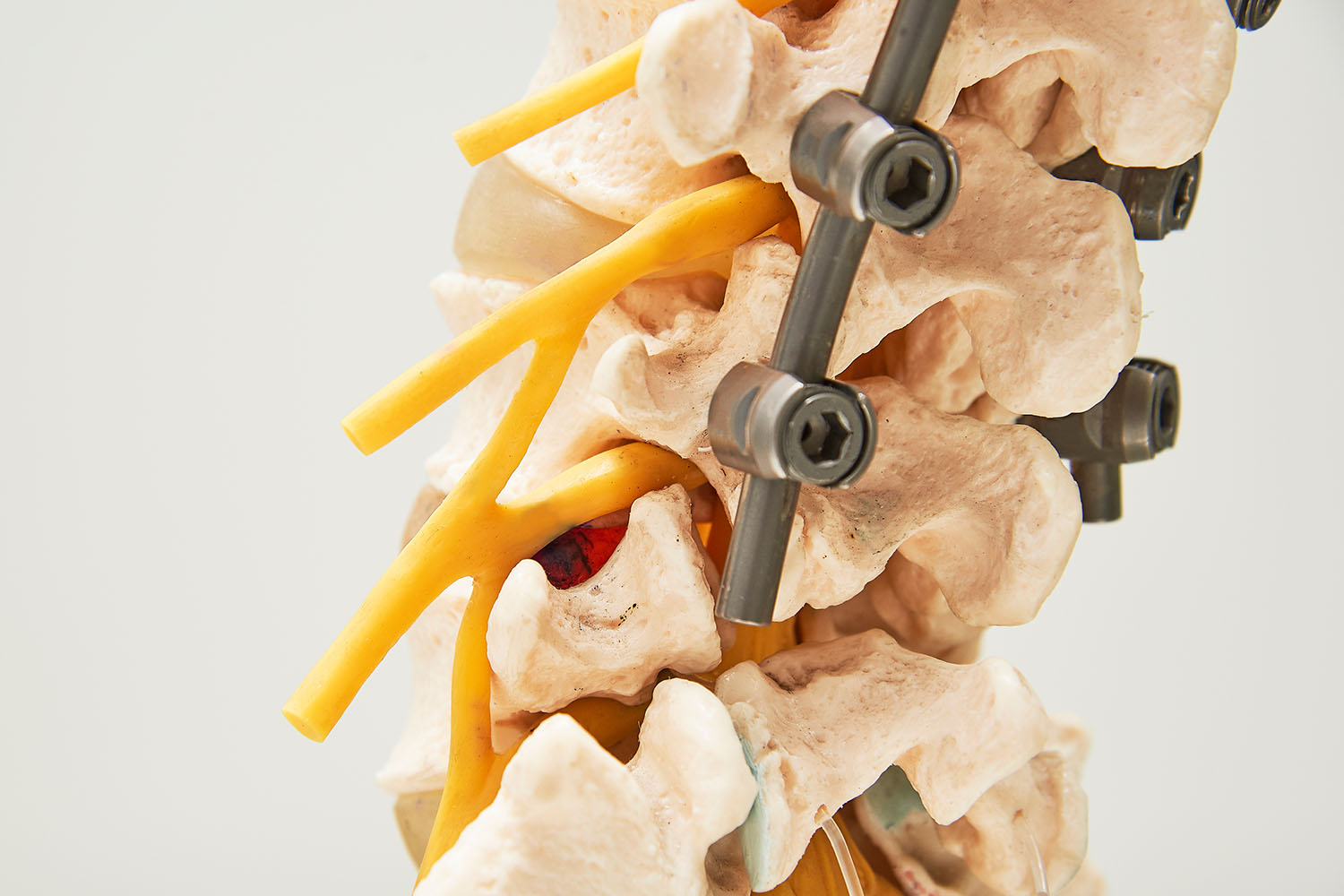
TLIF, or Transforaminal Lumbar Interbody Fusion, treats selected conditions affecting the lumbar spine. Doctors may consider this procedure when a damaged disc, spinal instability, vertebral slippage, or nerve compression continues to cause problems despite appropriate non-surgical treatment. During TLIF, the surgeon reaches the affected spinal level through the back and addresses the structures causing the symptoms. The surgeon may remove damaged disc material and prepare the space between the vertebrae for an interbody implant. Bone graft material can support the fusion process, while screws and rods help stabilize the treated segment. If a compressed nerve contributes to your symptoms, the surgeon may also decompress the nerve during the procedure. Dr. Ritesh Nawkhare plans the surgical approach according to your diagnosis, spinal anatomy, symptoms, neurological findings, and overall health.
When Can TLIF Become An Option?
Not everyone with lower back pain needs spinal fusion surgery. Many lumbar spine conditions improve with medicines, physiotherapy, rehabilitation, activity modification, and regular monitoring. Dr. Ritesh Nawkhare first identifies the likely cause of your symptoms and reviews how you responded to the treatment you have already received. If these measures control your pain and improve your movement, you may not need surgery. However, some patients continue to experience significant pain, nerve-related symptoms, or difficulty with everyday activities despite appropriate treatment. In such cases, the doctor may consider TLIF when a specific structural problem affects spinal stability or causes nerve compression that requires surgical treatment. He also assesses your neurological findings, spinal alignment, functional limitations, previous treatment, and relevant imaging before discussing surgery. This detailed approach helps match the treatment to your actual condition and individual needs.
Lumbar Conditions That May Require Evaluation
▪ Lumbar spinal instability that affects normal movement or causes persistent symptoms
▪ Selected cases of spondylolisthesis where one vertebra shifts over another
▪ Degenerative disc conditions that continue to cause significant back or leg symptoms
▪ Recurrent or severe disc problems associated with spinal instability
▪ Persistent nerve compression caused by changes in the lumbar spine
▪ Lumbar conditions where nerve decompression and spinal stabilization may both be required
▪ Structural changes that continue to cause symptoms despite appropriate non-surgical treatment
▪ Selected cases where spinal stability becomes an important part of surgical planning.
Signs That May Point To A Lumbar Spine Problem
During your consultation, Dr. Ritesh Nawkhare discusses your symptoms in detail. He considers when the problem started, how it has changed, what triggers or relieves your symptoms, and how the condition affects your work, mobility, sleep, and everyday activities.
Symptoms You May Experience
▪ Persistent or recurring lower back pain
▪ Pain spreading from the lower back into the buttock or leg
▪ Sharp, shooting, burning, or aching pain
▪ Tingling sensations in the leg or foot
▪ Numbness or reduced sensation
▪ Weakness in the leg or foot
▪ Difficulty walking or climbing stairs
▪ Discomfort while sitting or standing for extended periods
▪ Reduced ability to work, exercise, or perform routine activities.
What Happens During A TLIF Consultation?
A neurological examination helps him assess muscle strength, sensation, reflexes, movement, coordination, and walking. When required, he reviews your MRI, CT scan, or X-ray along with these clinical findings. This combined assessment helps identify whether a spinal problem is actually causing your symptoms. A scan may show changes that do not cause symptoms, so treatment decisions should consider your complete clinical picture rather than imaging alone.
Your Spine Assessment May Include
▪ Detailed discussion about your current symptoms
▪ Review of your medical and surgical history
▪ Assessment of previous treatments and their results
▪ Neurological examination
▪ Evaluation of muscle strength and sensation
▪ Checking reflexes, movement, and coordination
▪ Assessment of walking and functional limitations
▪ Review of relevant MRI findings
▪ CT scan or X-ray review when clinically required
▪ Assessment of spinal alignment, structure, and stability.
Why A Scan Does Not Automatically Mean Surgery
An MRI can show a disc bulge, disc degeneration, narrowing, or other changes in the spine. Seeing these findings on a report can naturally make you wonder whether surgery is necessary. However, an abnormality on a scan does not always cause pain or other symptoms. Some spinal changes may exist without affecting your daily life. Dr. Ritesh Nawkhare therefore looks beyond the imaging report when assessing your condition. He compares your scan findings with your pain pattern, neurological examination, medical history, and response to previous treatment. He also considers how your symptoms affect movement and everyday activities. This helps determine whether the spinal finding is actually responsible for your symptoms. When surgery is not clinically required, your doctor may discuss medicines, physiotherapy, rehabilitation, activity changes, or further monitoring. The focus remains on understanding the actual cause of your symptoms and choosing treatment accordingly.
Exploring Non-Surgical Treatment First For TLIF Surgery In Bandhavgarh
Your doctor may also suggest changes to daily activities, posture, or movements that place extra stress on the lower back. Regular follow-up helps track your progress and determine whether the symptoms are improving. If these measures provide adequate relief, you may not need surgery. When symptoms continue and the evaluation identifies a structural problem that requires surgical treatment, TLIF or another suitable procedure can be discussed based on your individual condition.
Non-Surgical Treatment May Include
▪ Medicines to manage pain and other symptoms
▪ Physiotherapy to support mobility and strength
▪ Guided rehabilitation exercises
▪ Activity and movement modification
▪ Posture and daily movement guidance
▪ Regular monitoring of symptoms and function
▪ Follow-up consultations to assess progress.
How Is TLIF Surgery Performed?
When Dr. Ritesh Nawkhare recommends TLIF after a detailed evaluation, he plans the procedure according to the affected spinal level, the source of your symptoms, and your individual spinal anatomy. The surgeon accesses the lumbar spine through the back and carefully works around the nerves and other important structures. If a nerve is compressed, he may release the pressure to create adequate space around the nerve. The damaged disc is then removed, and the space between the vertebrae is prepared for fusion. An interbody implant is placed in this space along with bone graft material to support the fusion process. Screws and rods help stabilize the treated spinal segment while the vertebrae heal. The surgical technique can vary depending on your condition and anatomy. Before the procedure, your doctor explains the planned approach, expected hospital stay, recovery process, activity restrictions, and follow-up care so you know what to expect.
The Procedure May Involve For TLIF Surgery In Bandhavgarh
▪ Reaching the affected level of the lumbar spine through the back
▪ Carefully relieving pressure from a compressed spinal nerve when required
▪ Removing the damaged disc causing the spinal problem
▪ Preparing the disc space for the fusion procedure
▪ Placing an interbody cage or suitable implant between the vertebrae
▪ Adding bone graft material to support bone fusion
▪ Stabilizing the treated spinal segment with screws and connecting rods.
Preparing For TLIF Surgery In Bandhavgarh
Tell your medical team about all medicines, supplements, and relevant health conditions so they can plan your care safely. It is also helpful to understand what you can expect after surgery, including movement, lifting restrictions, wound care, and follow-up visits. If you will need assistance with daily activities during the early recovery period, arranging support at home in advance can make things easier. Your treating team will provide specific instructions according to your surgery and individual health needs.
Important Preparation Steps
▪ Complete the medical tests recommended before surgery
▪ Attend the anaesthesia assessment when advised
▪ Tell your doctor about all medicines and supplements you take
▪ Share details of previous surgeries and treatments
▪ Inform the medical team about known allergies and relevant health conditions
▪ Follow the instructions provided before hospital admission
▪ Arrange support for the initial recovery period at home
▪ Understand movement restrictions and activity precautions
▪ Keep your follow-up schedule and recovery instructions in mind.
Recovery After TLIF Surgery In Bandhavgarh
During the early recovery period, your medical team monitors your pain, surgical wound, movement, muscle strength, sensation, and walking ability. As your condition improves, you may slowly increase your activity under medical guidance. Rehabilitation may become part of your recovery plan when your doctor considers it appropriate. You will also receive guidance about bending, lifting, exercise, work, driving, and other daily activities. Following these instructions helps protect the healing spine and supports a steady return to your routine. Regular follow-up also allows your doctor to monitor your progress and address concerns early.
Recovery Usually Focuses On
▪ Gradually increasing movement as advised
▪ Taking prescribed medicines as directed
▪ Keeping the surgical wound clean and protected
▪ Following lifting and activity restrictions
▪ Starting rehabilitation when medically appropriate
▪ Slowly returning to daily and work-related activities
▪ Attending scheduled follow-up appointments
▪ Undergoing follow-up imaging when clinically required.
Why Choose to Consult Dr. Ritesh Nawkhare?
Dr. Ritesh Nawkhare takes a detailed approach to lumbar spine problems, starting with an understanding of what is causing your symptoms. He reviews your medical history, symptom pattern, neurological examination, physical limitations, previous treatments, and relevant MRI or CT findings together. This helps him understand whether a spinal abnormality seen on a scan is actually responsible for your symptoms. When non-surgical treatment remains appropriate, he discusses these options and explains how they may help. If surgery becomes necessary, he explains why it may be considered and discusses the planned procedure, possible risks, expected benefits, alternatives, and recovery process. This gives you a clearer understanding of your condition and helps you make an informed decision about your treatment.
Frequently Asked Questions - Tlif surgery in Bandhavgarh
TLIF is a spinal procedure that stabilizes a lumbar spine segment and relieves pressure on affected nerves when non-surgical treatment does not provide enough relief.
Doctors may recommend TLIF for selected cases involving nerve compression, spinal instability, or other structural lumbar spine problems that persist despite appropriate treatment.
No. Many patients improve with medicines, physiotherapy, activity changes, and other non-surgical treatments. Dr. Ritesh Nawkhare evaluates the cause before considering surgery.
TLIF may help treat selected cases of spinal instability, spondylolisthesis, certain disc problems, and nerve compression caused by structural changes.
He reviews your symptoms, medical history, neurological examination, and relevant MRI or CT scans to understand your condition.
Recovery varies with your condition and overall health. Dr. Ritesh Nawkhare provides individual guidance on recovery, rehabilitation, and follow-up.
Book A Consultation With Tlif surgery in Bandhavgarh
Dr. Ritesh Nawkhare provides individualized evaluation for back, neck, nerve, and spinal conditions. During the consultation, he reviews your symptoms, medical history, previous treatment, and neurological examination findings. Relevant MRI, CT, X-ray, or other investigation reports may also be assessed when clinically required. The aim is to understand how your symptoms relate to the findings in your spine. Imaging alone does not always explain pain or nerve-related symptoms. Therefore, clinical findings and investigation results are considered together before treatment is planned.
Depending on your condition, treatment may include medicines, physiotherapy, activity modification, rehabilitation, monitoring, or further investigations. Surgery is considered only when it is clinically appropriate. If a surgical procedure is being discussed, the doctor explains the reason for surgery, expected treatment goals, possible alternatives, recovery process, and follow-up requirements.