
TLIF Surgery In Ambikapur | Dr. Ritesh Nawkhare at NNS Hospital
Spinal conditions can cause persistent back pain, leg pain, numbness, weakness, and difficulty moving. TLIF Surgery in Ambikapur may help selected patients who experience lumbar instability, nerve compression, or other structural spine problems. Dr. Ritesh Nawkhare at NNS Hospital carefully evaluates each patient before recommending treatment. During the consultation, he reviews your symptoms, medical history, physical examination, and scan reports. MRI, CT scans, and X-rays help him identify structural changes in the spine. He also compares these findings with your symptoms to understand the underlying problem. Depending on your condition, Dr. Nawkhare may recommend medicines, physiotherapy, activity modifications, regular monitoring, or surgery. He considers TLIF surgery when conservative treatments do not provide sufficient relief or when the patient’s condition requires spinal stabilisation. Before recommending TLIF, he evaluates spinal stability, nerve compression, symptom severity, previous treatments, and overall health. His goal is to identify the cause.
Understanding Tlif Surgery In Ambikapur
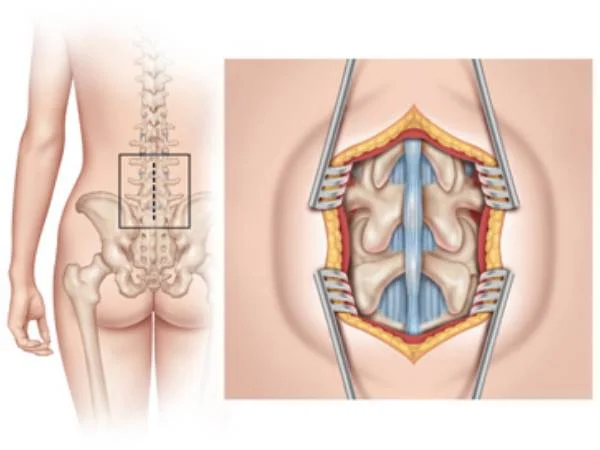
TLIF, or Transforaminal Lumbar Interbody Fusion, is a surgical procedure that helps stabilize selected areas of the lumbar spine. Surgeons may recommend this procedure for patients with spinal instability, nerve compression, or certain structural spine problems. During TLIF surgery, the surgeon accesses the affected spinal level through the back. First, the surgeon removes the damaged disc and prepares the disc space. Next, the surgeon places an interbody implant containing bone graft material. Screws and rods then support the treated vertebrae and maintain stability while the bones gradually fuse. However, TLIF does not suit every type of back pain. The surgeon considers the underlying condition, spinal stability, nerve compression, spinal alignment, symptoms, and response to previous treatments before recommending surgery. A detailed clinical examination and review of imaging reports help the surgeon decide whether TLIF offers potential benefits for the patient.
Conditions That May Require TLIF Evaluation
Doctors may recommend TLIF surgery when a lumbar spine condition requires both nerve decompression and spinal stabilisation. A spine specialist may consider TLIF in the following situations:
Lumbar spinal instability
Certain cases of spondylolisthesis
Degenerative spine changes that cause instability
Foraminal narrowing with structural instability
Selected cases of recurrent disc problems
Persistent symptoms associated with specific spinal conditions
Cases where decompression alone may not provide enough spinal stability Your symptoms, clinical examination, imaging reports, spinal stability, and underlying condition help the surgeon decide whether TLIF is suitable. However, a disc problem or age-related spinal degeneration does not automatically mean you need fusion surgery. The surgeon carefully evaluates your condition and discusses appropriate treatment options before making a recommendation.
Symptoms That May Point Towards a Lumbar Spine Problem
Lumbar spine problems can affect your back, legs, nerves, and movement. You may experience:
▪ Persistent lower back pain
▪ Pain spreading to the buttock or leg
▪ Tingling or numbness in the leg or foot
▪ Weakness in the leg
▪ Difficulty walking or standing
▪ Pain that increases with certain movements
▪ Difficulty with routine activities
▪ Symptoms that return after previous treatment
The doctor considers the location, duration, severity, and pattern of your symptoms. This helps guide the clinical evaluation and identify the possible cause.
A Diagnosis Begins Beyond The Scan
Spinal scans provide important information, but they cannot explain every symptom. MRI may show disc degeneration, narrowing, disc bulges, or nerve compression. Dr. Ritesh Nawkhare compares these findings with your symptoms and clinical examination.
He reviews:
▪ Location and type of pain or numbness
▪ Presence of weakness
▪ Changes in walking and daily activities
▪ Neurological examination findings
▪ Spinal alignment and stability
▪ MRI, CT, or X-ray findings when required
▪ Response to previous treatment
This complete assessment helps identify the possible cause of your symptoms. It also supports appropriate treatment planning without relying on imaging alone.
When Can TLIF Become An Option?
TLIF may be considered when a lumbar spine condition causes persistent symptoms despite appropriate non-surgical treatment. It may also help when spinal instability requires surgical stabilisation.
The evaluation may consider:
▪ The underlying spinal condition
▪ Degree of spinal instability
▪ Location and severity of nerve compression
▪ Duration and severity of symptoms
▪ Effect on daily activities
▪ Response to previous treatment
▪ Relevant MRI, CT, or X-ray findings
▪ Overall health and surgical factors
A consultation does not mean you will need surgery. It helps identify the cause of your symptoms and review suitable treatment options. If TLIF is appropriate, the doctor can explain why it may be considered for your condition.
How TLIF May Address The Spinal Problem ?
TLIF can combine nerve decompression with spinal stabilisation when the condition requires both. The surgical steps depend on the affected level and the patient’s spinal anatomy.
The procedure may involve:
▪ Reaching the affected lumbar segment through the back
▪ Relieving pressure on the spinal nerves when required
▪ Removing the affected disc
▪ Preparing the disc space for the implant
▪ Placing an interbody cage or implant
▪ Adding bone graft material to support fusion
▪ Using screws and rods to stabilise the spine
▪ Supporting fusion between the treated vertebrae
The exact technique varies based on the spinal condition, anatomy, affected level, and surgical findings.
What Is The Goal Of Tlif Surgery In Ambikapur ?
The objective of TLIF is not simply to treat an abnormal MRI finding. The procedure is planned to address a specific spinal problem that is contributing to symptoms or instability.
Potential treatment goals may include:
▪ Decompressing an affected nerve
▪ Stabilising an unstable spinal segment
▪ Restoring or maintaining appropriate spinal alignment
▪ Supporting fusion between selected vertebrae
▪ Reducing symptoms related to the identified spinal condition
▪ Improving functional ability where appropriate
Individual results can vary. Surgical outcomes depend on the underlying condition, duration of symptoms, neurological involvement, overall health, and several other factors.
What Happens Before Tlif Surgery In Ambikapur ?
A detailed preoperative assessment helps determine whether TLIF is appropriate and allows the surgical plan to be tailored to the patient’s condition.
This may include:
1.Detailed Clinical History
Your pain pattern, neurological symptoms, previous treatments, medications, previous procedures, and relevant medical history are reviewed.
2.Neurological Assessment
Strength, sensation, reflexes, walking, and other neurological findings may be assessed to identify nerve involvement.
3.Imaging Correlation
MRI, CT, and X-rays may be reviewed to understand disc changes, spinal alignment, narrowing, instability, and other structural findings.
4.Treatment Planning
If surgery is appropriate, the expected purpose of the procedure, possible alternatives, recovery considerations, and relevant risks can be discussed before proceeding.
Recovery And Rehabilitation After Tlif Surgery In Ambikapur
Recovery is a gradual process. The timeline can differ depending on the patient’s diagnosis, surgical findings, general health, and response to rehabilitation.
Postoperative care may include:
▪ Gradual mobilisation
▪ Pain management
▪ Wound care
▪ Activity guidance
▪ Restrictions on lifting or strenuous movements during early recovery
▪ Physiotherapy when recommended
▪ Follow-up examinations
▪ Monitoring of neurological symptoms and recovery
Returning to normal activities should follow the surgeon’s individual recommendations rather than a fixed timeline.
Why Choose Dr. Ritesh Nawkhare For Spine Evaluation?
Dr. Ritesh Nawkhare holds MBBS, MS in General Surgery, and MCh in Neurosurgery qualifications. He evaluates conditions affecting the brain, spine, spinal cord, and peripheral nerves.
For patients considering TLIF, Dr. Nawkhare first identifies the cause of symptoms. He then determines whether spinal stabilisation is clinically appropriate.
▪ Assesses spine symptoms in detail
▪ Performs a thorough neurological examination
▪ Correlates clinical findings with relevant imaging
▪ Evaluates spinal instability and nerve compression
▪ Considers non-surgical treatment when appropriate
▪ Plans surgery based on individual clinical findings
▪ Explains treatment options, expected outcomes, and recovery
His approach focuses on the patient’s symptoms, clinical findings, and overall condition rather than imaging alone.
Is TLIF Suitable For Every Patient With Back Pain?
No. Back pain can have many causes, and spinal fusion does not suit every patient.
Some conditions may improve with medicines, physiotherapy, lifestyle changes, activity modification, or regular monitoring. Other conditions may require a different surgical approach.
Dr. Ritesh Nawkhare considers TLIF when a specific spinal condition indicates the need for fusion. He reviews your symptoms, clinical findings, potential benefits, risks, and overall health before recommending surgery.
A specialist evaluation helps identify the cause of your symptoms and select an appropriate treatment approach.
When Should You Seek Specialist Spine Assessment?
Do not ignore persistent or worsening spine symptoms. Seek specialist evaluation when they affect your movement or daily activities.
Consider a specialist assessment if you have:
▪ Persistent back pain
▪ Back pain with leg pain
▪ Numbness or tingling
▪ Leg weakness
▪ Difficulty walking or standing
▪ Recurring symptoms after previous treatment
▪ Symptoms that continue despite non-surgical care
Seek urgent medical attention for sudden severe weakness, new loss of bladder or bowel control, or rapidly worsening neurological symptoms.
Frequently Asked Questions - Tlif Surgery In Ambikapur
TLIF is a lumbar fusion procedure used for selected spinal conditions involving instability, nerve compression, or structural changes.
It may be considered when symptoms persist despite appropriate treatment and spinal stabilization is clinically required.
No. Many disc conditions can improve with non-surgical treatment. TLIF is considered only in selected cases.
MRI, X-rays, CT scans, and a neurological examination may be recommended based on your condition.
If leg pain is caused by nerve compression, decompression during TLIF may help relieve related symptoms.
Recovery varies between patients. Activity and rehabilitation are gradually planned according to individual progress.
Book a Consultation for Tlif Surgery In Ambikapur
Dr. Ritesh Nawkhare evaluates your symptoms, medical history, neurological findings, and relevant MRI, CT, or X-ray reports before discussing whether TLIF is appropriate. The assessment also considers spinal stability, nerve compression, previous treatment, and how your symptoms are affecting daily activities.
▪ Detailed lumbar spine evaluation
▪ Review of previous scans and medical reports
▪ Assessment of nerve compression and spinal stability
▪ Discussion of non-surgical and surgical treatment options
▪ Individualised TLIF treatment planning when indicated
▪ Guidance regarding surgery, recovery, and follow-up
A consultation does not automatically mean surgery. The aim is to understand the cause of your symptoms and determine the most suitable treatment approach for your condition.
Schedule a consultation with Dr. Ritesh Nawkhare at NNS Hospital for personalized spine evaluation and TLIF treatment planning.