
Scoliosis In Nagpur | Specialist Evaluation And Personalized Spine Care With Dr.Ritesh Nawkhare
Scoliosis is a spinal condition in which the spine curves sideways instead of maintaining its usual alignment. The degree of curvature can vary widely. Some people have a mild curve that causes little or no discomfort, while others may experience changes in posture, balance, movement, flexibility, or back comfort. Scoliosis can develop during childhood or adolescence as the spine grows, but it can also become noticeable in adults due to age-related spinal changes or other underlying conditions. A curved spine may not always cause obvious symptoms in the early stages. However, uneven shoulders, an uneven waistline, one hip appearing higher than the other, changes in posture, back stiffness, or difficulty with certain movements may indicate the need for an evaluation. Understanding the cause and severity of the curvature is important before deciding on any treatment. At Neurosys Multispeciality Centre in Nagpur, Dr. Ritesh Nawkhare provides a detailed neurological and spine-focused evaluation based on the patient’s symptoms, medical history, physical findings, and functional concerns. When required, further investigations or specialist opinions may be recommended. The approach focuses on understanding how scoliosis affects the individual and providing clear guidance on appropriate monitoring, rehabilitation, or further care.
Understanding Scoliosis And Spinal Curvature
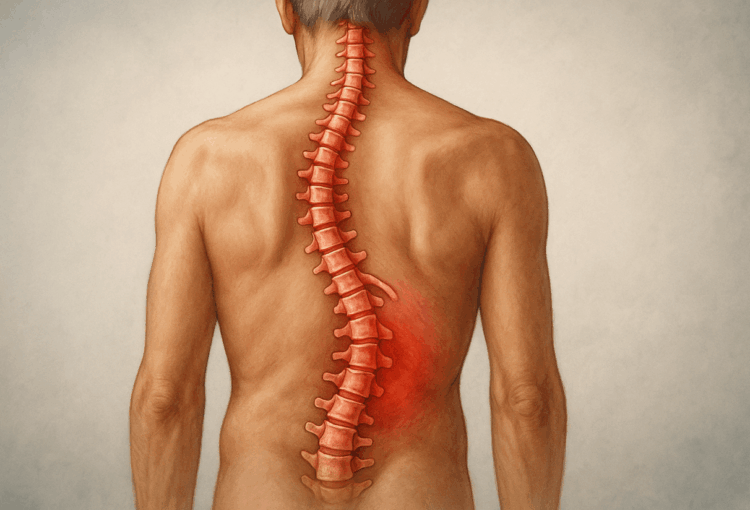
A healthy spine has natural curves that help the body remain balanced and absorb movement. In scoliosis, the spine curves sideways and may also rotate to some degree. This can change the appearance of the shoulders, waist, back, or hips. Scoliosis can vary considerably from one person to another. Some people have a small curve that remains stable, while others may experience changes over time. The age at which scoliosis develops, the location of the curve, its severity, and the patient’s overall health can all influence management.
▪ The curve may affect the upper, middle, or lower spine
▪ One shoulder or hip may appear higher than the other
▪ The waistline may look uneven
▪ The back may appear more prominent on one side
▪ Some patients may experience back discomfort or fatigue
▪ Larger curves may affect posture, movement, or physical activity
A detailed assessment helps determine what the spinal curvature means for the individual patient.
When Does Scoliosis Need Medical Attention?
Not every spinal curve requires immediate treatment. However, noticeable changes in posture or persistent symptoms should not be ignored. Children and teenagers may require particular attention because the spine can continue changing during periods of growth. Adults may also need evaluation when a previously known curve becomes more noticeable or when new pain, stiffness, weakness, or difficulty with movement develops.
You may consider specialist evaluation if you notice:
▪ Uneven shoulders or hips
▪ A visibly curved or asymmetrical back
▪ One side of the rib cage appearing more prominent
▪ Persistent back discomfort
▪ Changes in posture or walking
▪ Difficulty with certain physical activities
▪ Increasing stiffness or reduced mobility
▪ A known history of scoliosis that requires follow-up
Dr. Ritesh Nawkhare can assess the neurological and functional aspects of the condition and help determine whether further spine evaluation or imaging is appropriate.
Scoliosis Can Affect Children, Teenagers And Adults
Scoliosis does not occur only in one age group. The reasons behind the curvature can differ depending on when it develops. In children and adolescents, scoliosis may become noticeable during growth. Sometimes, the cause remains unknown. In other cases, spinal curvature may be associated with another underlying condition.
Adults may have a curve that developed earlier in life or may develop degenerative changes in the spine with age. Previous spinal problems, changes in discs and joints, or other conditions can contribute to adult spinal curvature. The patient’s age, symptoms, growth pattern, medical history, and physical examination all help guide further evaluation.
Signs That May Suggest Scoliosis
Scoliosis may develop gradually, so the early signs are not always obvious. Parents may notice changes in a child’s posture before the child reports any discomfort. Adults may notice changes while looking in a mirror, wearing clothes, or performing everyday activities.
Possible signs include:
▪ Shoulders that appear uneven
▪ One shoulder blade that is more prominent
▪ Uneven waistline
▪ One hip appearing higher than the other
▪ A noticeable sideways curve of the back
▪ Clothes fitting unevenly
▪ Changes in posture while standing or walking
▪ Back pain or muscular fatigue in some patients
A visible curve does not always indicate severe scoliosis. Proper evaluation is important before deciding whether treatment is necessary.
How Scoliosis Is Evaluated ?
Scoliosis assessment begins with understanding how the spinal curvature affects the patient. Dr. Ritesh Nawkhare reviews the symptoms, medical history, age, previous treatment, physical activity, and any changes that have occurred over time. A clinical examination may assess posture, spinal alignment, walking pattern, movement, strength, reflexes, sensation, and other neurological findings when required.
Depending on the situation, imaging may be recommended to understand the curve more clearly.
▪ Medical and family history review
▪ Posture and spinal alignment assessment
▪ Evaluation of movement and mobility
▪ Neurological examination when indicated
▪ Assessment of pain and functional limitations
▪ Imaging when clinically appropriate
▪ Review of previous scans or treatment records
This approach helps distinguish a mild curvature that can be monitored from a condition that requires more detailed investigation.
When Imaging May Be Recommended ?
Imaging provides important information about the structure and alignment of the spine. The type of imaging depends on the patient’s age, symptoms, clinical findings, and suspected cause.
X-rays are commonly used to evaluate spinal curvature and measure its severity. MRI may be recommended in selected patients when the doctor needs more information about the spinal cord, nerves, discs, or other soft tissues.
Imaging may be considered when:
▪ The spinal curve is clearly visible
▪ Symptoms are persistent or worsening
▪ Neurological findings are present
▪ The curvature appears to be progressing
▪ The cause of the symptoms is unclear
▪ Further treatment planning requires detailed information
Dr. Ritesh Nawkhare considers the clinical findings before recommending investigations, helping avoid unnecessary testing.
Treatment Depends On The Individual Condition
Scoliosis treatment is not the same for every patient. A mild and stable curve may only require observation and periodic assessment. Other patients may need structured rehabilitation, pain management, or evaluation by an appropriate spine specialist.
Treatment decisions may depend on:
▪ Age and stage of growth
▪ Degree and location of spinal curvature
▪ Whether the curve is changing over time
▪ Presence of pain or functional limitations
▪ Neurological symptoms
▪ Underlying cause of the curvature
▪ Overall health and activity level
The goal is to choose an appropriate approach rather than treating the X-ray alone.
Non-Surgical Care And Regular Monitoring
Many patients with scoliosis do not require surgery. When the curve is mild or stable, monitoring can be an important part of care. Depending on individual needs, non-surgical management may include physical therapy, exercises recommended by a qualified professional, posture guidance, activity modification, and treatment of associated discomfort.
▪ Regular clinical follow-up
▪ Monitoring of spinal alignment
▪ Appropriate physical activity
▪ Physiotherapy when recommended
▪ Strength and mobility support
▪ Management of associated pain
▪ Guidance about everyday activities
For growing children and adolescents, periodic assessment can help identify changes early.
When May Surgery Be Considered?
Surgery is not required for most people with scoliosis. It may be considered in selected patients with significant or progressive spinal curvature, particularly when the curve causes substantial functional problems or other important concerns.
A decision about surgery requires detailed evaluation of the spinal anatomy, symptoms, age, curve severity, progression, and overall health. It may also involve consultation with an appropriate spine surgery specialist.
At Neurosys Multispeciality Centre, Dr. Ritesh Nawkhare can evaluate the neurological and spine-related aspects of the patient’s condition and help determine whether further specialist assessment is appropriate.
Supporting Mobility And Everyday Comfort
Scoliosis can affect more than spinal alignment. Some patients may experience muscle fatigue, stiffness, reduced flexibility, or discomfort during prolonged standing or activity. These problems can influence work, exercise, sleep, and other daily routines.
Care should therefore consider how the condition affects the person’s actual life.
▪ Maintaining safe and appropriate physical activity
▪ Improving mobility where possible
▪ Addressing muscle weakness or stiffness
▪ Managing discomfort appropriately
▪ Supporting healthy posture and movement
▪ Adapting activities when necessary
▪ Monitoring changes over time
The focus remains on helping the patient maintain useful movement and participate in everyday activities as comfortably as possible.
Scoliosis Care At Neurosys Multispeciality Centre
Scoliosis requires an individualised approach because spinal curvature can present differently in children, teenagers, and adults. At Neurosys Multispeciality Centre in Nagpur, Dr. Ritesh Nawkhare considers the patient’s symptoms, neurological findings, spinal concerns, and functional needs during evaluation.
The aim is to understand the condition clearly before recommending the next step.
▪ Detailed clinical assessment
▪ Evaluation of neurological and spine-related symptoms
▪ Review of previous reports and scans
▪ Appropriate imaging when required
▪ Guidance on monitoring and non-surgical care
▪ Identification of symptoms requiring further specialist evaluation
▪ Personalised follow-up based on the patient’s condition
This patient-focused approach helps ensure that treatment decisions remain appropriate to the individual’s needs.
Why Choose Dr. Ritesh Nawkhare For Spine Evaluation?
Dr. Ritesh Nawkhare is a neurosurgeon with MBBS, MS (General Surgery), and MCh (Neurosurgery) qualifications. His training supports the evaluation and management of conditions involving the brain, spine, spinal cord, and nervous system. For patients with scoliosis, a neurological and spine-focused assessment can be useful when symptoms extend beyond spinal curvature or when there are concerns involving movement, sensation, strength, or nerve function.
▪ Specialist neurological assessment
▪ Evaluation of spine and nervous system-related symptoms
▪ Individualised clinical approach
▪ Appropriate investigation when required
▪ Clear explanation of findings
▪ Guidance on further treatment or specialist referral when needed
▪ Ongoing follow-up based on the patient’s condition.
Frequently Asked Questions
Book a Consultation For Scoliosis In Nagpur
A noticeable spinal curve, persistent back discomfort, posture changes, or concerns about worsening scoliosis deserve appropriate evaluation. Early assessment can help clarify whether the condition needs observation, rehabilitation, further investigation, or specialist treatment. At Neurosys Multispeciality Centre in Nagpur, Dr. Ritesh Nawkhare evaluates patients according to their symptoms, clinical findings, neurological status, and individual needs.
▪ Understand the nature of the spinal curvature
▪ Assess symptoms affecting movement or daily activities
▪ Identify neurological concerns when present
▪ Review previous reports and imaging
▪ Decide whether further investigations are needed
▪ Plan appropriate follow-up or specialist care
If you are concerned about scoliosis in yourself or your child, a specialist evaluation can provide a clearer understanding of the condition and the next appropriate step.